Not the Christmas Truce

Every Christmas it’s the same; historians of the Great War have their annual battle against proponents of duff history relating to the 1914 Christmas truce.  It particularly irks me that the myth of a football match is perpetuated, and that there are entirely inappropriate monuments to it in Flanders, because it detracts from the wealth of evidence that football formed an important part of rest and recreation activities for troops behind the lines for a good part of the war. As a football fan it vexes me to think of the (actual and metaphorical) raised eyebrows when football is mentioned in connection with the Great War, such is the power of duff history to aggravate historians. (Photo of a Great War football for illustration purposes only – see credit at end.)

Of course, it could be a sweeping statement on my part that there is a wealth of evidence, so maybe I should qualify that by saying that there is such evidence from the sources relating to 16th (Irish) Division that I have consulted for the last decade and more.  I have read references to football matches and competitions (not just kick arounds) in primary sources (battalion war diaries and letters) and secondary sources (unit histories and memoirs) together with other recreational activities such as rugby, cross-country running, boxing and shooting competitions.

For example, continuing the Christmas theme, despite the winter of 1916/17 being cold in the extreme, a chaplain of 48th Infantry Brigade records, in a letter home, a football match at Locre on St. Stephen’s Day (Boxing Day) where his battalions were behind the lines.  The men had been relieved from frontline trenches in the Vierstraat sector (Ypres Salient) on 22nd December and went into Divisional reserve at Locre.  Six days later they would be back in the freezing front line trenches, but there was no question for some of them (or maybe their commanding officers) that they should be kept tucked up inside.

The pull of familiar rituals of home also manifested themselves in other ways for the Roman Catholics of 8th Royal Dublin Fusiliers during that Christmas. The same padre, Fr Willie Doyle, describes:

“I got permission from General Hickie to have Midnight Mass for my men in the convent, a privilege which they showed their appreciation of by turning out in a way I never expected. The chapel is a fine large one; in ordinary times there are over 300 boarders and orphans in the convent.  At the end of the chapel is the refectory separated by folding doors, so that by opening these we had double the space. An hour before Mass every inch of space was filled, even inside the altar rails and in the corridor, while numbers had to remain outside in the open, for word had gone round about our Mass and men from other battalions came to join us, some walking several miles from another village …

 It was a Midnight Mass none of us will ever forget and will certainly live in our memories for many a year … A good 500 men came to Holy Communion, so that I was more than rewarded for my work …We were fortunate too in the weather, which had been very bad for months; however at Xmas it was beautifully fine and frosty, and Christmas a good day also, which helped to make things more pleasant… It was a strange Xmas.  Masses in the morning, a good dinner for the men in the afternoon, which they thoroughly enjoyed ….”

Although the battalion war diary does not confirm either the football match or the Midnight Mass, it does confirm the Christmas dinner for the men:-

“Xmas day. The men were given a holiday today and their Xmas dinner was eaten in a large marquee put up in the convent grounds.  The dinner went off very well and the men seemed to enjoy the day very much.  Major General W.B. Hickie and Brigadier General F.W. Ramsay visited the men at dinner.”

The NCOs had a separate dinner and the officers of the battalion also dined together in the dining room of Locre Convent on St Stephen’s Day.  Twenty-one of the officers present signed their names on the reverse of the menu card, including second-in-command of the battalion, Major A.C. Thompson, his brother, Captain F.S. Thompson, MC and the padre, Fr Willie Doyle, SJ, MC.  

Whether the following incident occurred pre or post dinner Fr Doyle does not say:-

Dec: 26th.  The only thing of interest to chronicle today is a gallant but unsuccessful attempt to get a couple of months’ vacation by means of a ‘Blighty.’  I was riding on my bicycle past a waggon when the machine slipped, throwing me between the front and back wheels of the limber. Fortunately the horses were going very slowly and I was able, how I cannot tell, to roll out before the wheel went over my legs.  I have no luck, you see, else I should be home now with a couple of broken legs, not to speak of a crushed head.  The only commiseration I received was the remark of some passing officers that ‘the Christmas champagne must have been very strong.’”

He also wrote:-

“Up at the Front Line all was quiet.  The Germans hung white flags all along their barbed wire and did not fire a shot all day, neither did we, so there was a slight attempt at least at ‘peace on earth to all men.”

One of 48th Infantry Brigade’s fellow brigades, 49th, had its 7th Battalion Royal Inniskilling Fusiliers in the front line on Christmas Day. Its history records:-

“At the time we all cursed heartily that it should be our bad luck to be holding the front line on Christmas Day … during the morning the Divisional Commander paid a visit to the battalion, and wished everyone the compliments of the season. The G.O.C. sympathised with our lot, but wished us the very best of luck in the New Year.  Certainly, the General looked after his ‘boys’ wherever they were, and had the knack of cheering everyone with whom he came into contact.  We learnt afterwards that he visited every unit in the Division that day … Practically, no hostile action took place all day – in fact, it was so quiet as to be uncanny.  About dusk the Divisional Artillery fired a few salvoes over, but the enemy did not reply.  The remainder of the evening was very quiet.  It was not for two days that either side began to liven up, and then the overture came from our side.”

Confirmation, as explained in The Remarkable Story of the Christmas Truce (see link) that low scale Christmas truces did take place after 1914, but nothing like those that took place the first Christmas of the war. However the only organised football matches, as opposed to kick-abouts, that the fighting men of the Great War ever participated in were ones between their comrades.

Finally, I don’t know who Reg was (see below), but if he was in a unit of 16th (Irish) Division that was behind the lines on Christmas Day 1916 he struck lucky; equally if was in a unit that was in the front line it seems things weren’t too onerous anyway and he had a break at New Year to look forward to, if the account of the 7th Inniskillings is anything to go by:-

“A few days later we were relieved on the 30th inst., and went back to the ‘Shelters’ where it was decided to make up for the loss of Christmas by giving the men a really good feed.  On the 31stDecember the officers held a dinner in Kemmel chateau.”

Sources/credits:-

My photo of the football held in Queen’s Museum Dover Castle belonging to 8th Battalion East Surrey Regiment, B Company, 6th Platoon (nothing to do with this blog, maybe a blog for another time), but it is a (famous) football from the Western Front.

Quotations from letters written by Fr Willie Doyle, SJ, MC, held in the family archive.

Photo of Locre Convent by Fr Frank Browne, SJ, MC & Bar, which had previously been in general circulation, taken from Father Browne’s First World War, E.E. O’Donnell, SJ, Messenger Publications, 2014.

My photos of the 8th Royal Dublin Fusiliers’ officers’ 1916 Christmas menu card held in the aforementioned family archive.

The Book of the Seventh Service Battalion The Royal Inniskilling Fusiliers, by G.A. Cooper Walker, Brindley & Son, Dublin, 1920.

My photos of inside and outer cover of a 16th (Irish) Division 1916 Christmas card.

History Hit documentary on YouTube via the link with my historian friends Taff Gillingham and Peter Hart addressing the duff history of the 1914 Christmas Truce.

Evacuation

I’m a bit late publishing this as I have been rather poorly, not that there is any set timetable for blogs.  This is a review of Peter Hart’s new publication and in the circumstances of the delayed timing of my review, there is a certain irony in the title of the book.  Evacuation – ‘nuff said!

Despite the grimness of war, a Peter Hart book is always a pleasure to read and this one is no different.  Evacuation showcases his easily accessible style of writing, which also incorporates lots of first hand testimony and primary evidence.  If I said it was a comprehensive assessment of the evacuation of the allied forces from the Dardanelles peninsular there would probably be someone who would contradict me, but it’s more than detailed enough for me to grasp the narrative.  

I believe that this book could be a stand alone read for someone who had no real previous knowledge of the five acts of the Gallipoli tragedy before the sixth – the evacuation.  Hart briefly reminds us of those five previous acts: conception, the abortive naval operations, the botched 25th April 1915 landings, the Helles battles and the Anzac breakout accompanied by new Suvla landings.

Turning to the evacuation itself, Hart explains how this also took place in stages over a period of two months, December 1915 into January 1916, and we get an initial flavour of this in the Preface. However, the following chapters take us through the journey of why an evacuation became necessary and how, after lots of to and fro, it became a reality.  We read of the conflicting opinions as to whether it was actually necessary and of the inevitable prevarication, hubris, jockeying, but also informed assessment, of those in authority responsible for the decision making and the process.  Hart explains how some of those people involved, from the humblest infantryman upwards, were reluctant to be seen to run away or leave behind chums consigned to the soil of the peninsula.  We learn how certain naval commanders were convinced that another naval operation could be launched and the straits forced.  However, having initially indulged in a fit of petulance when overruled, they fully committed to getting the evacuation done.

Having got to the point where a definite decision was made we learn about the nitty-gritty of how it was accomplished; subsequent chapters inform on the differences of opinion on how to do it followed those of the actual need to do it!  We learn about the challenges of the winter weather, sea conditions and difficulties of logistics; all three to be influenced by luck, good or bad, as much as anything else.  However, the best possible staff work was undertaken to try and mitigate all contingencies.  The biggest challenge faced by the allies was keeping plans and movements secret from the Turks because even perfect conditions would not be much good if the Turks had knowledge of an evacuation.

Hart draws us into the practicalities of the operations; the fine balance of keeping enough stores and animals until evacuation took place and destruction of anything that could not be evacuated but would be useful to the enemy; the sad inevitableness of the destruction of many horses and mules; the ingenious strategies and new gadgets invented to fool the Turks into thinking trenches remained full of their enemy’s soldiers; blunders, mishaps and improvisations galore along the way.

We learn about the conditions the men had to endure in the final days and hours; there is also an account of continuing unpleasantness after leaving the beaches, being transported by crowded lighters.

Hart explains all this using accounts from all groups of participants, in terms of rank, branch of service, military, naval, political and nationality (including Turks).  As always, he incorporates humour where appropriate; camaraderie and humour being a big factor in how men got through what is put in front of them to try and  overcome.

We know the multiple evacuations were a success, nevertheless Hart builds a tension throughout to hold the reader’s attention and I always wanted to keep on reading.  Indeed, it is a book I will return to.

For those of us who aspire to be excellent authors it is a small comfort to record that even those that are produce typos.  There were two that I spotted; one being too insignificant to mention; one of major significance and too embarrassing to mention!  I believe the latter has been corrected for later print runs, but maybe you’d like to buy the book and try and spot it yourself.  But hey!  There are plenty of good reasons for reading this excellent account of the allies’ only success in the Gallipoli campaign – the Evacuation.  I commend Peter Hart’s book to you.

White Feather

As I creep towards the end of Peter Hart’s excellent book about the evacuation of Gallipoli, I reflect on the thoughts of Lance Corporal Edgar Rule, 14th (Victoria) Battalion, 4th Brigade, New Zealand and Australian Division, who was heavy-hearted at the mates left behind in the cemeteries.  He and his chums worried about whether the graves would be treated with respect; they needn’t have.

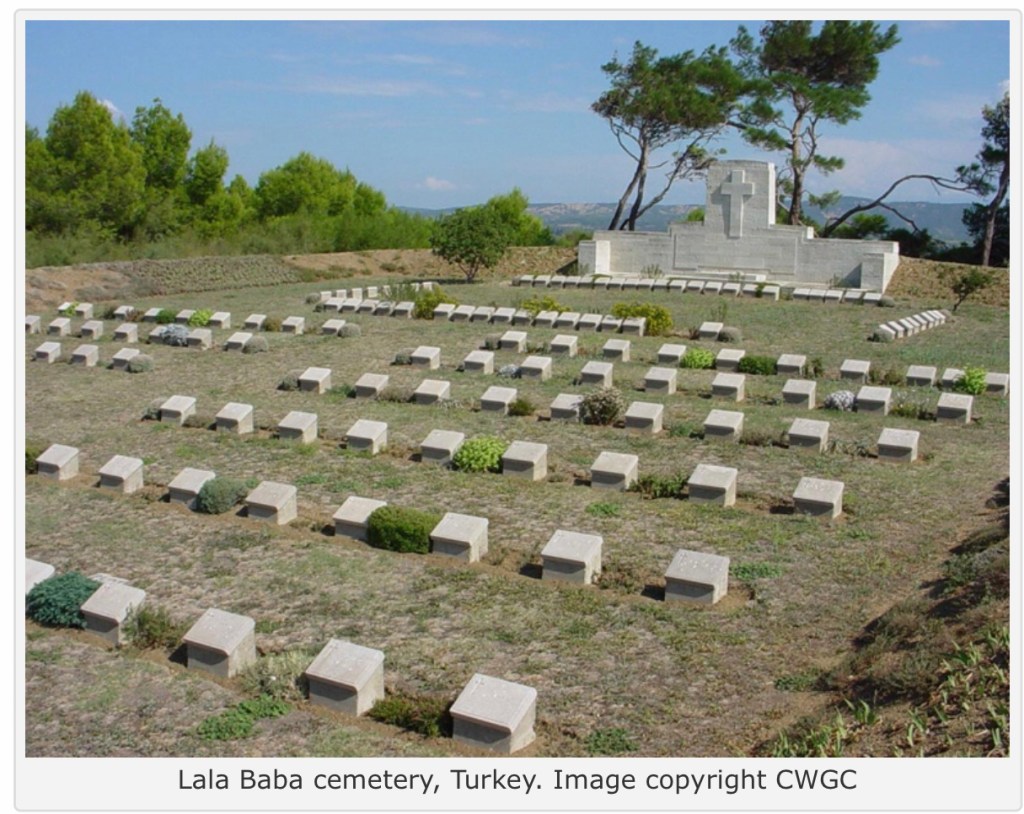
We all know that the ANZACs were a cog in a bigger machine of nationalities who fought at Gallipoli and this blog is about one of those “others”.  Charles Frederick Ball, an Englishman who served with an Irish regiment, lies in LaLa Baba cemetery, a cemetery I have visited on all three occasions that I have been to Gallipoli with Peter Hart Battlefield Tours.  However, I have only recently learnt Fred’s story, so it seems I will have to visit again!

By the time the winter evacuation of Gallipoli took place, the 10th (Irish) Division had already left the peninsular in the autumn to take up a new fight in Salonica.  Many of their fallen comrades left behind had no known graves and are commemorated on the memorial to the missing at Helles.  Of those that have a known grave, the story of Private Charles Frederick Ball, D Company, 7th Battalion Royal Dublin Fusiliers, killed on 13th September 1915, buried plot II.A.8., LaLa Baba cemetery, is intriguing.

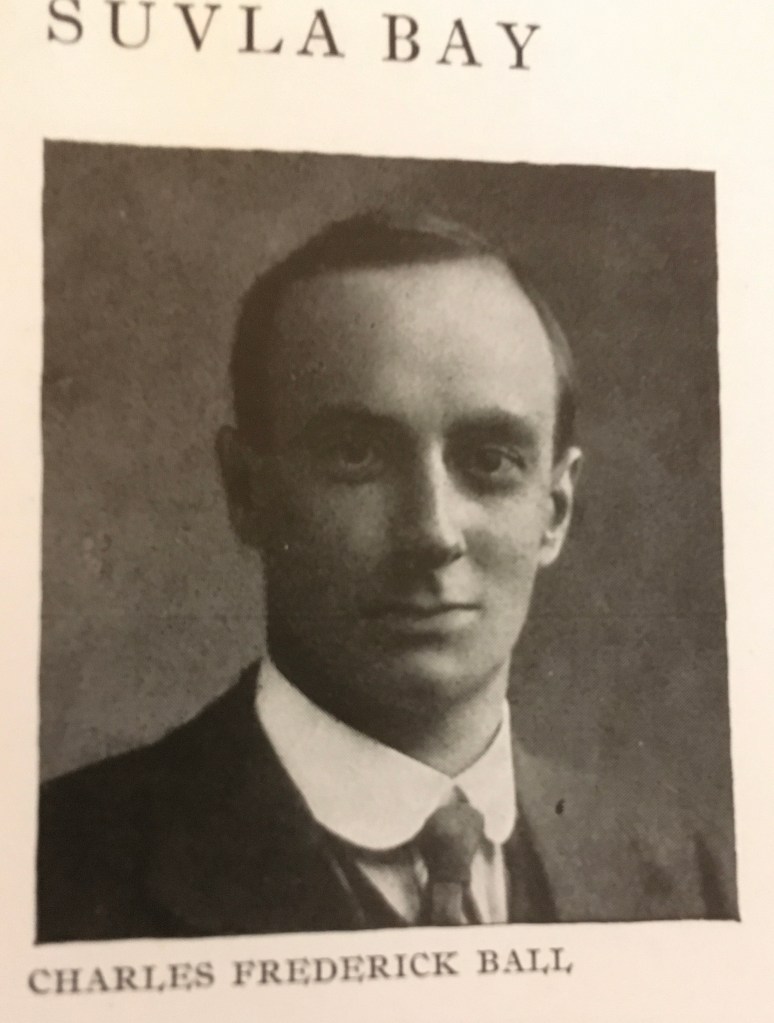
Fred Ball was born in Loughborough, Leicestershire in 1879 to Mary and Alfred Ball and was educated at Loughborough Grammar School.  Rather than follow in the footsteps of his father, who was a chemist, Fred opted for botany, starting work in a nursery and then getting a position at the Royal Botanic Gardens, Kew in 1900. In 1906 he became a sub-foreman and a few months after that, on the recommendation of the curator of Kew, he transferred to Dublin to become principal assistant to the Head Keeper at the Royal Botanic Gardens, Glasnevin.  In 1911 he and a colleague went on a mission to Bulgaria, to collect plants from the Balkan mountains and inspect a famous rose garden. They were the personal guests of King Ferdinand, shortly to become an ally of the enemy whose forces Fred’s Irish chums were to fight in Salonica.  Although of a studious nature, Fred was reputed to be a fine cricketer and golfer, whose romance with Alice Lane was progressing nicely, along with his career, which also included being editor of the publication Irish Gardening.  Fred married Alice in December 1914 and their home was at 15 Percy Place, Dublin off the Grand Canal; she was to become a war widow before the dawn of the following Autumn.

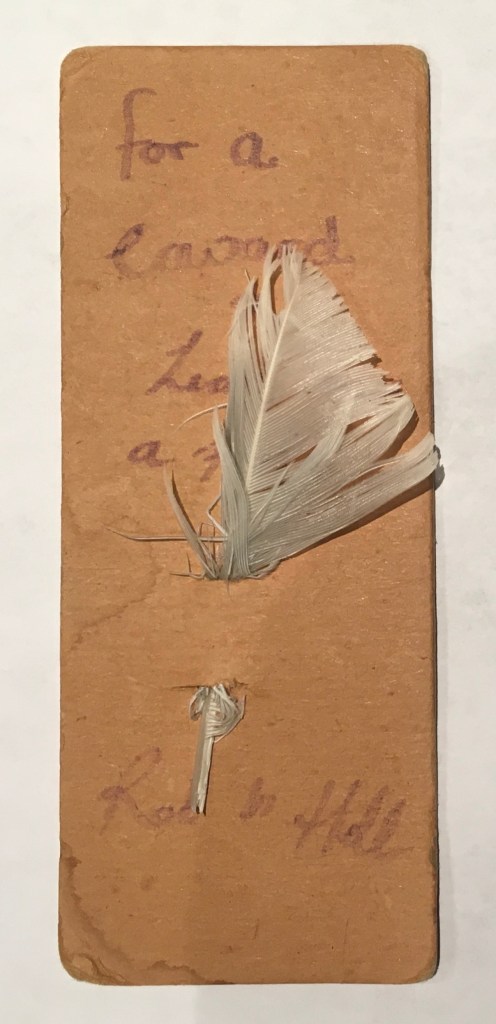
Thirty-five year old Fred, in common with a comrade of the same age, who was to become a good pal, did not immediately volunteer on the outbreak of war.  It is said that the catalyst prompting Fred to enlist was the receipt of white feather (a sign of cowardice) at his place of employment which was reported in the Irish Times

Fred enlisted as a private into D Company, 7thRoyal Dublin Fusiliers, who found fame as the Pals at Suvla Bay, by Henry Hanna.  By the time of its publication in October 1916, Fred had been killed at Gallipoli and his chum, Frank Laird, was wounded there but recovered and about to be gazetted Second Lieutenant.

Frank Laird’s memoir gives a detailed account of his experience of Gallipoli.  The D Company Pals landed at Suvla Bay on 7thAugust and their objective was Chocolate Hill.  They marched with other units along the shoreline, skirted the Salt Lake and extended into open order over open country, except for a few trees and scrubby bushes.  Frank remembered that:-

“I spent the day with Ball, my friend, according to our agreement on the trawler as we steamed over, to stick together, and with a few other chaps of our section.  For most of the time we knew and saw little outside our small fellowship.  We dived into our ditch together when the section leader gave the order, and rose and rushed on when he gave it again.  We tried to recollect our home training, and to resist the impulse to crowd together in the safer looking spots, or to make for the false security of trees or outstanding bushes.  Occasionally one of us tripped and fell on the sun-baked earth, but immediately relieved the feelings of his friends by jumping up and running on.  At one spot a shrapnel shell burst low over our line, and one of us was missing at the next stop.”

The war diary for 7th Royal Dublin Fusiliers (WO 95/4296) reported the action for Saturday 7th August 1917 and ended as follows:-

“The HILL was captured about 8pm by parts of “A” and “D” Coys., and details of other Regiments the whole led by MAJOR R.S.M. HARRISON.  CASUALTIES: 3 officers, 109 other ranks.”

Unfortunately, the momentum of Saturday’s success was not carried on during Sunday, when rest and regrouping was the order of the day.  The following day, Monday 9th August 1915, Pte Frank Laird was assigned to an ammunition carrying party to go out to the 6th Royal Dublin Fusiliers in an advanced position. He was wounded while trying to return to his company, shot through the right shoulder and lung and he fractured three ribs. 

“I fainted again for a few minutes, and when I came to found I was bandaged up.  I asked the D Company man to take my glasses to my friend Ball, from whom I had been separated that morning for the first time, and requested some stretcher bearers who were there to take me down.”  

Pte Laird went into the medical evacuation chain; Pte Ball remained to fight further days and suffered an ignominious death a month later.  On 4th September 7th Royal Dublin Fusiliers were relieved from support trenches two miles from LaLa Baba and dug in around Chocolate Hill.  From there they moved back to “rest” camp on the beach at Lala Baba on 9th September and over the next four days they were subject to shell fire resulting in thirty casualties, one of which was the death of Fred Ball.  During those four days Fred continued to take advantage of opportunities to examine the peninsula’s flora, as he had done, whenever he could, since his arrival.  He is reported to have been sheltering behind a rock digging up weeds with his bayonet when he was killed on 13th September 1915.  

The report Frank Laird received a few weeks later, while in hospital in Birmingham, of his chum’s death was different:-

As the days went by I began to hear of many of my friends who had gone under.  My old Company was severely mauled after I left it, and among others my chief friend Ball was reported killed.  While waiting on the beach with other sick (he was ill with dysentery) a shell fell near him and wounded one of his comrades.  True to his nature he waited to help in the wounded man instead of rushing to cover.  A second shell followed the first and he was struck in the back.  In his weak condition he had not vitality to make a fight for life and died some hours later.  He was buried by the sea.  Thus very soon was fulfilled a presentiment he mentioned to me one day in Basingstoke, that he would not live to be very old, at which I then laughed.  A silent and reserved Englishman, it did not take a long acquaintance to find the kindliness that lay behind his modest bearing, and the strength that made him a man not to be trifled with.  It took longer to discover that he had already made a name for himself, and would have gone far in his calling had he not found a glorious end in Gallipoli.  He was a friend on whom one might count for a lifetime.”

By the time of his death, Fred had sent seeds back to the Botanic Gardens at Glasnevin for cultivation, including some Gallipoli Oak acorns.  A cultivar of the South American shrub Escallonia is named C.F. Ball in his memory, a beautiful shrub with dark green leaves and bright red flowers which is excellent for bees.  

Fred Ball’s personal file would be on my list to look up when I eventually return to the National Archives, Kew, just along the road from Fred’s first employment as a botanist, but unfortunately there is no record on the website, only a Medal Index Card reference.

While researching Fred I came across this blog/website, from which I took the photo of LaLa Baba cemetery as it is better than mine:-

https://worldwarzoogardener1939.wordpress.com/2015/09/13/remembering-c-f-ball-of-kew-glasnevin-killed-gallipoli-13-september-1915/

The blog contains an obituary printed in The Garden magazine dated 16th October 1915.

My blog, next week, will be a review of Peter Hart’s book The Gallipoli Evacuation.

N.B. The White Feather is from a personal collection, it is not the one given to Fred Ball.