As a result of the Germans’ Spring Offensive in 1918, many units of the allied forces went into hasty retreat. The 7th Battalion Canadian Railway Troops, with attachments from elsewhere, were working on laying a new railway track in the Peronne area i.e. Quinconce-Cleary line and Quinconce-Tincourt line. Their war diary recorded on 23rd March 1918: “At midnight Friday 22/23rd word was received from XIX Corps that Battalion should be moved to back area. All Companies were accordingly withdrawn and Battalion moved to ESTREES”.
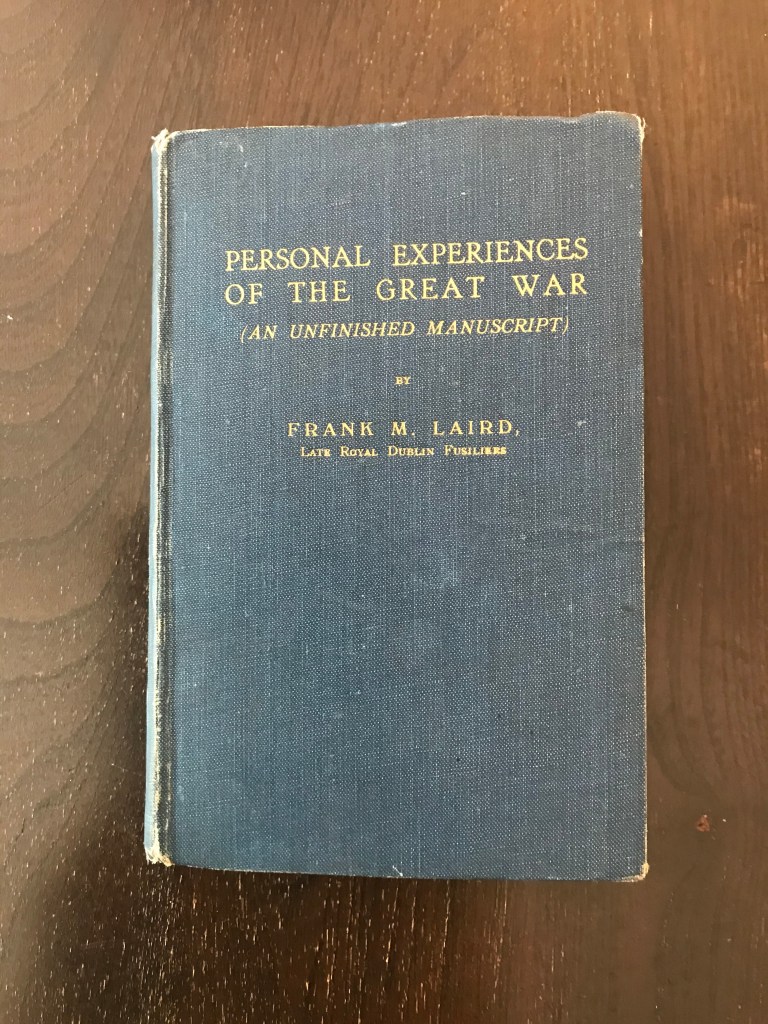
One of those attached to the Canadian railway battalion was Royal Dublin Fusilier Second Lieutenant Frank Laird, who later reported in his memoir how the bridges at Peronne were being blown up as his entrenching battalion was beating a hasty retreat across the Somme.
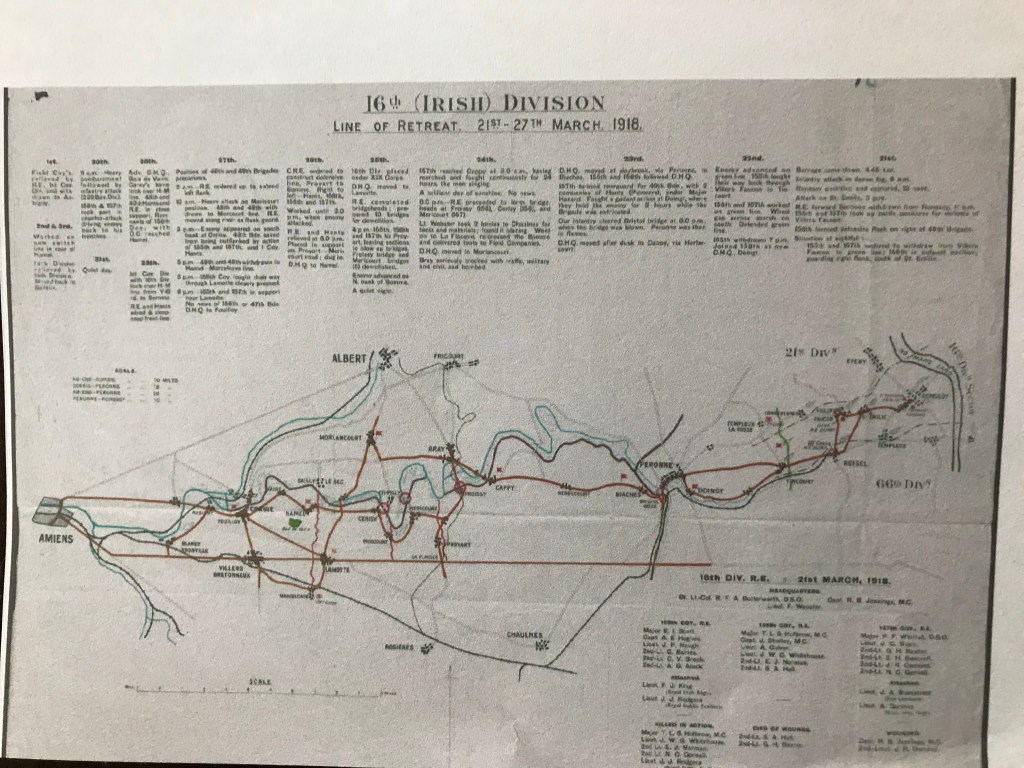
The war diary of 16th (Irish) Division contains a map of the line of retreat and the work of the Divisional Pioneers (11th Hampshires) and 167th Company Royal Engineers.
They had, on 23rd March 1918:-
“ … fought a gallant action at Doingt where they held the enemy up for 2 hours while the Brigade (49th) was extricated.”
Four days later, Major Cecil Hazard of the 11th Hampshires who had done fine work at Doingt, was recorded as missing in the war diary, 27th March 1918: “Major C.J. Hazard was in command of a group of men belonging to various units of the Bde who were checking the hostile advance on the right. This is the last that was seen of him & it cannot be ascertained what his ultimate fate was”. In fact, he had been taken Prisoner of War following a hopeless counter-attack and survived the war. Second Lieutenant Frank Laird was also captured in the same action.
Had the National Archives not been out of bounds for the past year, Major Hazard’s personal file would have been on my list to consult out of interest to read his account of the action. It was the case that returned POWs in 1919 were required to write an account of the circumstances of their capture. As it happens, I had already consulted the file for Second Lieutenant Laird which contains his explanation, on the official form, Form 2.A, which had to be returned to the War Office in Whitehall. This document, however, commences from 25th March 1918, whereas the bigger picture from four days previously can be obtained from Frank’s memoir.
Frank Laird’s testimony dated 17th January 1919 Form 2.A, Confidential document reference number 139588/7
“On 25th March 1918, while with the 20th Entrenching Battalion, I received orders to join my regiment, Royal Dublin Fusiliers, with seven other officers and a number of men. We proceeded, under the command of Lieut. W. McHutchinson (sic) to the transport lines of the 48th Brigade near La Motte, & thence in search of our own battalions (1st and 2nd Dublins). We failed to get in touch with them on the 26th, but after two days continuous marching met, on 27th March, the remains of the 48th Brigade in retreat near Morcourt, Somme, under machine gun and shell fire. I was placed with 2/Lt P.R. Ellis (sic) RDF and between 20 & 30 men by Brigadier General Ramsey (sic) 48th Bde on a bluff commanding a cross roads outside the village (Morcourt, as I believe) with instructions to see the last of our men through before retiring. Here we lost one man killed and two wounded by a shell. Having seen the last man through, Lt Ellis & I withdrew our own men under strong machine gun fire and proceeded west, parallel to the Amiens-Peronne road. After proceeding some hundreds of yards we met a major of the Hampshire Regiment and Captain Cowley of the R.Dub.Fus. who ordered us to turn and counter attack. Accordingly we formed the men who were with us in line and advanced against the enemy. We were immediately brought under heavy shell fire. We continued to advance until close enough to see a number of the enemy running away about 300 yards ahead. We then came under machine gun fire at close range from the left flank which quickly brought us to a stand still. I believe that every officer, N.C.O., & man of our own party was either killed or wounded. Lt. P.R. Ellis was wounded over the kidneys by a piece of shell. I dressed him, and, having gone to a man shot through the legs, was myself wounded in the left side by a bullet which incapacitated me. It was now dusk, and after a short interval, the enemy advanced again and took prisoners those who remained alive. Two of their stretcher bearers dressed my wound and assisted me behind a haystack where I met Captain Duff-Taylor [and] 2/Lieut W.R.W Briscoe both of the R. Dub. Fus.”
Captain S. Duff-Taylor, MC and Second Lieutenant W.R.W. Briscoe survived their imprisonment, as per the Monthly Army List of January 1919.
Lieutenant W. MacHutchison was one of eight officers wounded, but was retrieved by colleagues and taken on their withdrawal to Villers-Bretonneux. However, he did not survive and was buried at that place.
Neither Captain Cowley nor Second Lieutenant Ellis made it into captivity in Germany, they both died of wounds. Ellislies in Hautmont Communal Cemetery and Cowley at Le Cateau, having died in the makeshift hospital at Le Cateau where Frank Laird had been treated for his wound.
A longer version of this blog can be found in the second edition of the Great War Group’s Salient Points Journal.
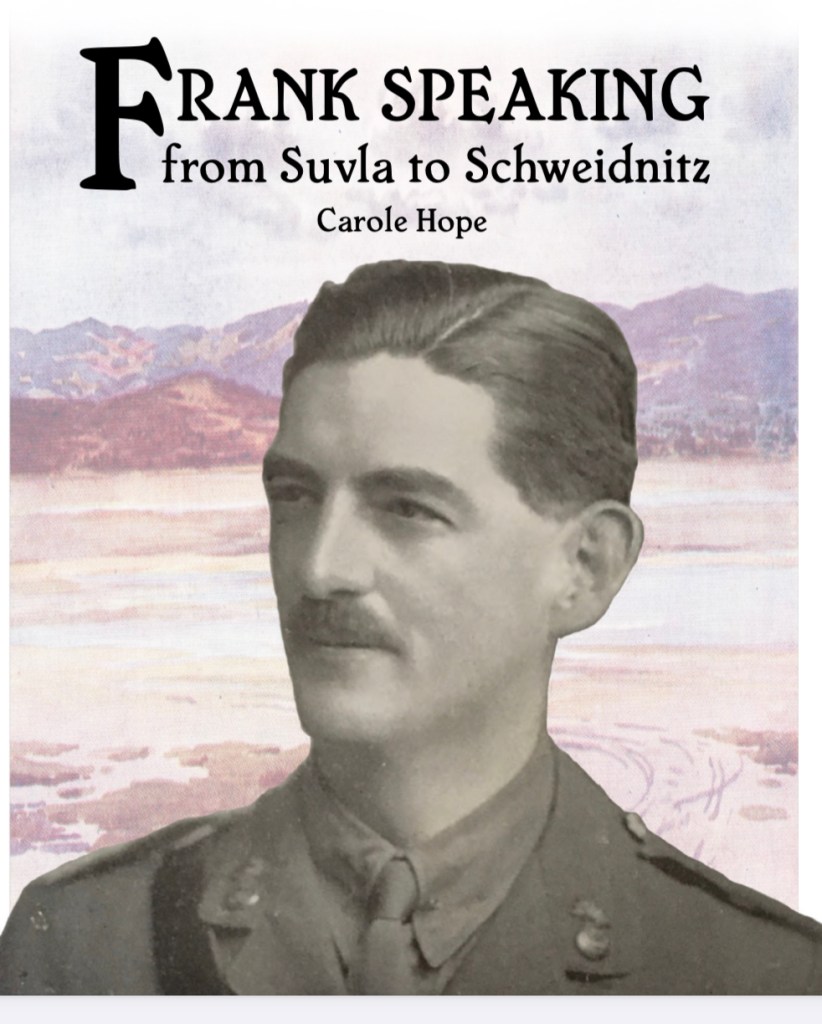
An even more detailed account can be found in the forthcoming publication Frank Speaking, which is my full transcription of Frank Laird’s memoir with additions by me and also fills in the gap of the original memoir, following Frank’s early demise.
Notes
Frank misspelled names in his testimony of 17/1/19. He transposed 2/Lt Ellis’ initials and McHutchison does not have a middle *n* and Ramsay is with an *a* not an *e*.
War diary of 7th Canadian Railway Troops, Volume 12, 1st – 31st March 1918 can be downloaded online from http://www.collectioncanada.ca
National Archives references:-
Frank Laird personal file WO 339/64735
Cecil Hazard personal file WO 339/10673
WO 95/1972 16th (Irish) Division war diary
WO 95/1966 11th Battalion Hampshire Regiment (Pioneers) war diary
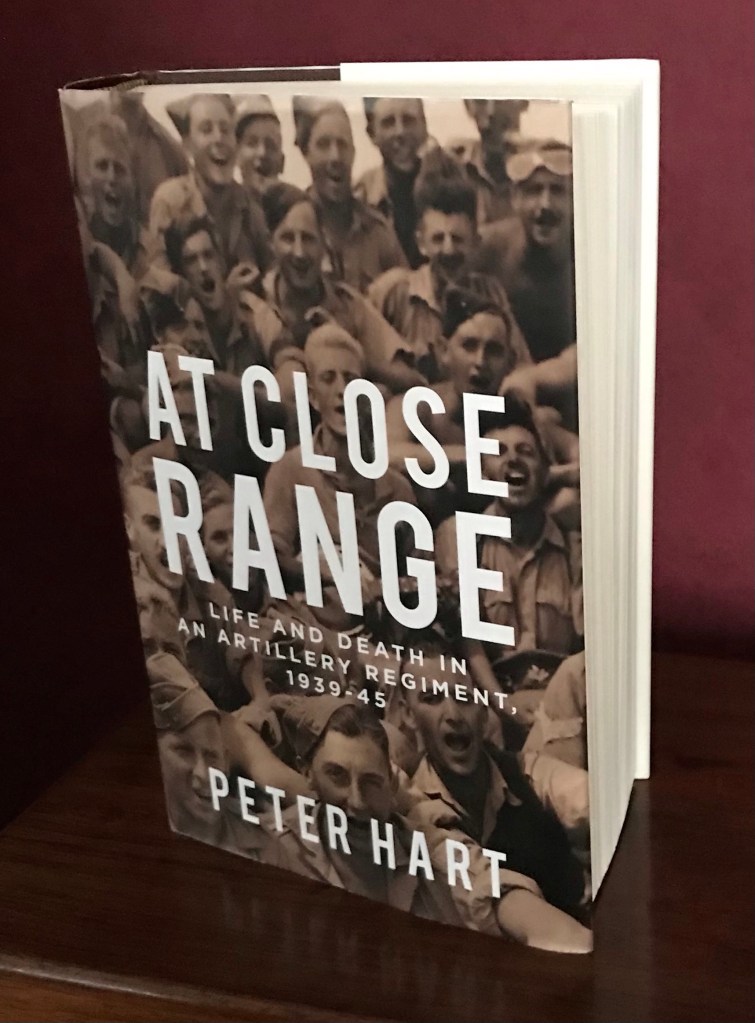
This blog post is a temporary digression from the Great War into the Second World War; a review of Peter Hart’s new book At Close Range, Profile Books, 2020, ISBN 978-1-78816-165-7. Peter’s end product is a seamless transition from the quality of his previous excellent work, both in terms of the writing and the accompanying maps and photos. There are 493 pages of text, excluding the bibliography and index, 8 maps and 32 black and white photographs. I noticed a couple of typos, which is a comfort to those authors who do not have access to a conventional publisher! However, my only complaint is that there is no map for the actions on mainland Europe. N.B. Any errors/omissions in this blog are mine in trying to summarise 493 pages.
This is a long review suitable for a blog, rather than something succinct for a magazine or some other platform. However, no review, can do justice to Peter’s detailed narrative of the South Notts Hussars during the Second World War and I heartily recommend his book. Note that I mostly only refer to the generic South Notts Hussars/ SNH even in situations when other units form part of the bigger picture, as explained in the book by Peter.
It’s a different war, but the story Peter tells of the involvement of the 107th Royal Horse Artillery Regiment, South Notts Hussars has echoes to the earlier world-wide conflict. Despite the name of the regiment implying otherwise, the South Notts Hussars was an artillery regiment and the gun they were initially trained to use was an 18-pounder field gun, a mainstay of the Great War. Also, many of the men’s fathers had fought in the Great War.
The book is effectively split into two parts. The first part follows the evolution and formation of the South Notts Hussars, the men who joined, their training and deployment to North Africa at the end of January 1940 until the regiment was decimated in June 1942 during the Battle of Knightsbridge, in Cyrenaica, a desert region in present day Libya (German and Italian Axis forces) bordering Egypt (Commonwealth Allied forces).
The second part charts the rebuilding and refitting of the regiment and the actions they subsequently saw, starting with the build up to the Battle of El Alamein. There was a shift in the demographic when new arrivals proved to be from almost anywhere except Nottinghamshire and some reinforcements even came from detention camps, having previously committed some sort of transgression.
Peter Hart draws on the wealth of archival material i.e. first hand accounts of veterans, many interviewed by him, held at Imperial War Museum for all his books. In At Close Range his interviewees were younger than veterans he had previously interviewed: “their voices were vigorous, their memories vivid, their grip of details still firm”. Once again, Peter uses the accounts of veterans to good effect in strengthening his narrative and analysis.
Mobilised in 1939 the territorial volunteers of the South Notts Hussars fought in almost every major battle in North Africa, going on to fight in Sicily, the invasion of Europe and into defeated Germany. The Preface explains that the book covers the adventures of this one regiment of the Royal Artillery and that the main focus is on the men rather than strategy or operational and tactical minutiae. That said, Peter always sets out the political, military and logistical context, the interaction of the SNH with other military units, together with a cast of senior officers, to tell a rounded story.
I liked the scene setting of Chapter 1, briefly covering the aforementioned Battle of Knightsbridge, leaving the reader in no doubt about the nature of the conflict that the Nottinghamshire volunteers experienced, as described by Sergeant Ray Ellis of A Troop, 425 Battery. Chapter 2 then commences with a chronological account.
We learn about the class divisions, family, sporting and social connections of the men that made up this territorial unit, including the difficulties of getting promotion, irrespective of ability, unless one’s face fitted. We learn that one motivation for joining a territorial unit, in the build up to an imminent war, was to have an element of control over one’s fate with local chums, rather than wait to be conscripted who knew where. We learn about drills, training, annual camp, the workings of the 18 pounder field gun and the six man team to make it operational, taking into account all variables including weather.
The book covers the whole spectrum of life as lived by a serving soldier in all the theatres of war the gunners found themselves in. There is first hand testimony of such issues as transportation, living conditions, feeding the troops, alcohol, health challenges, plagues of fleas, flies and mosquitos, keeping themselves entertained, the humour, the tension, how they handled stress and quarrels to maintain morale. There was the first experience of being bombed, of which Ray Ellis describes his reaction, as per the title of this blog – “I was appalled. I was terrified, horrified and stupefied”. There was the difficulty of keeping the guns clean and operating in desert conditions, and later in the wet, low-lying ground of Belgium and the Netherlands, and adapting to upgrades of guns and other kit. There is testimony, good and bad, of their relationship with civilian populations when located behind the battle zones and their ingenuity in procurement of “goods”, anything from eggs to lorries!
We follow the SNH to Egypt, to the military base at Mersa Matruh and the challenging conditions of a firing camp in the Sinai desert. They helped to hold the strategically important port of Tobruk through nine months of siege conditions in 1941 (the defence of which depended mainly on the guns, the most effective weapon against tanks). During the action commencing 30th April 1941, all the 107th RHA SNH 425 Battery’s records for continuous firing were broken during two days of fighting. An indication of the size of the garrison is gleaned from the fact that in October 1941 the Australian Division was withdrawn in stages from Tobruk by sea and replaced by 70th Division, some 47,000 men were evacuated and replaced by 34,000 others.
In November, Operation Crusader took place, which was a close run thing but which saw the end of the siege and the Allies holding on to Tobruk. After the fighting died down the men of SNH were left mentally and physically exhausted, following a fortnight’s hard fighting on top of the effects of the eight month siege. It was estimated that during the siege the regiment had fired some 70,000 shells. Nineteen of their men were dead and thirty-seven wounded.
On 30th December 1941 the South Notts Hussars were recalled to Cairo and they had a period of R&R. In the new year they were issued with a brand new set of 25-pounders and Quad gun towers and were moved between different camps (Alexandria and Cairo) before arriving in late April at Fort Capuzzo near the Libyan border for intensive training, involving getting used to operating as part of a “brigade box”, as explained by Peter.
By May 1942 they were located inland in the desert south of Tobruk as part of the Knights Bridge Box. Nothing I can say in a review can convey the chaos, the confusion and the viciousness of the fighting of the Battle of Knightsbridge, commencing 27th May 1942, which lead to heavy casualties in dead, wounded and many men taken Prisoner of War by the Germans.
The remnants of the SNH moved back to Royal Artillery Base Depot, Almaza in Cairo to rebuild and regroup. The war raged on without them and General Erwin Rommel became the man of the moment, his Afrika Korps armoured columns driving across the border deep into Egypt. A new Eighth Army defensive line was established beginning at El Alamein. The SNH were posted to form part of the 7th Medium Regiment, RA a regular regiment that had previously fought in the Western Desert, Greece and Crete. They moved up to El Alamein, arriving 15th July 1942, the SNH assigned to gun positions about 200 yards from the sea and had hard task masters in the form of the regular officers with whom they now worked. All through July and August the SNH strove to match their new colleagues and they achieved significant improvements.
Enter, also, into the story, Lieutenant General Bernard Montgomery to take over command of Eight Army and Rommel once again looking to go on the offensive. Over the course of a few days at the start of September the SNH fired an enormous number of rounds in support of the fighting of Battle of Alam Halfa and took a strong retaliatory battering, before returning to their coastal gun positions.
As the SNH resumed their daily routines, innovations in command, control and deployment of weapons, old and new, took place in the build up to the Battle of El Alamein for which there were meticulous preparations by all, from Montgomery downwards. The artillery bombardment for Battle of El Alamein commenced on 23rd October 1942 at 21.40 paving the way for the infantry 20 minutes later. Although at one point the position was in the balance, slowly the strength of the Germans started to drain away as their long supply lines fast ran out of fuel. The main attack, Operation Supercharge, commenced on 2nd November; on 5th November the SNH were ordered to advance some 10,000 yards to take up new positions amid what had been the German lines, following the retreat of Rommel’s Afrika Korps.
We now move on to the advance to victory in North Africa early in 1943. SNH were again on the move, a long trek rewarded when they drove out of the desert on the approach to Tripoli flanked by green fields, orchards and farmhouses. Plenty of fighting lay ahead for the Eighth Army, the March battles of Medenine and then Mareth, the SNH playing their part including the fall of the port of Sfax in April, after which the North Africa Campaign was over for them. The SNH missed the final battle for Tunis when they were withdrawn from the line.
After two months rest at Cheriba the SNH and colleagues of 7th Medium Regiment RA were moved to a transit camp before embarking ship in July 1943 headed for Malta to train for landing on Sicily, where they would be tasked to support the 1st Canadian Division. For the SNH the scale of the war was to become bigger and they lost a sense of belonging, compared to what had previously been a close knit group in North Africa. Between then and the end of the war they were to work with, or be in close proximity to, a variety of units and nationalities, including Commandos and Airborne troops. Their self-assurance and morale was further undermined when exposed to the heartbreaking sights of Sicilian civilians (and infrastructure) who were unavoidable collateral damage, which had not been part of the dynamic of operations in North Africa. The contrast in the fighting environment was heightened by the different ground and weather conditions which was more exhausting than that to which they had previously acclimatised.
In the event the campaign fizzled out for SNH when they were removed from the front line and sent to Messina, to support the bombardment across the Straits in readiness for the Allied landing on the Italian mainland. Whilst the bombardment and invasion was a success, SNH remained in Sicily at Pitunina as they were to be detailed off elsewhere. Here they were able to relax for several months, leaving Sicily on 8th November to return to the UK. The journey back was somewhat fraught at times, but eventually they docked at Liverpool on 10th December 1943 and were allowed a months leave.
Regrouping at billets at Felixstowe they began training for landing in Normandy and there was a change of status for SNH, becoming part of 9th Army Group Royal Artillery. They moved to Brighton, where there were conflicts and difficulties of integrating men who had seen action with those who had not. At the end of April 1944 they were posted to Yorkshire, then in June to Dudsbury camp near Bournemouth, on to Tilbury from where they set sail across the English Channel on 13th July 1944, passing hundreds of ships involved in Operation D-Day landings and skies filled with aircraft. Once again an indication that they were a very small cog in a massive machine.
They disembarked at Arromanche and again came under the command of Canadians, to prepare for Operation Goodwood and the capture of Caen. They had their first casualty on 18th July when the attack went in. German resistance in Caen crumbled on 21st July and the SNH moved forward, astonished at the amount of damage caused by the Allies’ attack.
The next target, in August, was Falaise providing support so close up to the Canadians and Polish Armoured Division that they came under friendly fire. And still their colleagues asked them to position themselves far forward during the assault on Quesnay Wood. Eventually, the wood was abandoned by the Germans; the Allies advance continued. The Falaise battles ended with most of the German Seventh Army having been destroyed or in captivity.
There followed a period of respite for British units, back behind the lines, including the SNH, who ended up in the Rouen area. Some of the men even went on unofficial leave to drive to Paris late in August, albeit with little or no money! After R&R the SNH were assigned to support 3rd Canadian Division, taking up positions near Marquise from where their batteries had Calais within their range.
Calais fell on 29th September. The next area of operations for SNH was the Leopold Canal in north-west Belgium as part of the operation to capture the port of Antwerp. Their preparatory bombardment was not only returned in kind, but with the lethal interest of flamethrowers. Eventually the Germans started to fall back, but not without further fighting in their desperation to hold on to Antwerp. They still controlled the Scheldt estuary and even after they were cleared from its south bank, they clung on to two islands that formed the north bank. Here the SNH were faced with an amphibious challenge in providing fire support for the attack.
By 4th November the Germans had been cleared from the Scheldt estuary and SNH moved east into the Netherlands. They formed part of a mass artillery barrage for a successful assault by XII Corps across the Canal du Nord and River Meuse towards Roermond. On they advanced, in stages, towards Sittard; men were maimed by mines and lives lost from bombs rained down from the Luftwaffe. On 14th December 1944 the Germans launched a last gasp offensive in the Ardennes i.e. the Battle of the Bulge, but SNH remained in Sittard.
Here their gun positions were being shelled by enormous 210mm German guns, which engendered a state of nervousness they had never previously felt. The SNH’s batteries were pulled back 4 miles to Geleen where they celebrated Christmas in comfortable billets. By now it was so cold they had to regularly fire the guns at random during the day to keep the mechanisms going. Moving in the new year, the SNH found themselves firstly at Susteren and then on to Koninsbosch near the German border. This phase of operations for SNH come to an end in the knowledge that the Germans’ Ardennes offensive had failed. They were moved north to the west bank of the River Meuse early in February 1945, taking up the worst gun position they had ever come across, for a number of reasons, including deep, unyielding, mud. The whole area bristled with guns. They were attached to XXX Corps tasked with driving the Germans out of the area and secure a bridgehead over the River Rhine at Wesel. The barrage began on 8th February and a stricken Allied bomber jettisoned its bombs causing the SNH multiple deaths and casualties. On 13th February they fired a barrage to assist Scottish infantry units in their attack on Goch. By the time the ground the other side of the Meuse was cleared late in February, the SNH had fired about 14,000 rounds. Across the river they went, north, close to Nijmegen, then returning south to take up positions on the outskirts of Gennep. On 1st March they moved forward across the border into Germany where they had a period of rest before crossing the Rhine.
The crossing was planned for the early evening of 23rd March, SNH went to the main British concentration area near Xanten, where they were part of hundreds of medium and heavy guns firing a preliminary heavy counter-barrage to silence German batteries. One of their last tasks, in support of the Canadians again, was clearing the “island” formed between the River Waal and the Rhine close to Arnhem.
Despite the end being so obviously near, the Germans fought on and the men of SNH got edgy, fearing fate dealing them a cruel blow just as a positive outcome was “in the bag”. The last round the SNH fired in the war was on 14th April 1945 as the Allies rapidly advanced, during which one gun malfunctioned and a gunner was hit in the foot. However, there was no more fighting for them and they pressed on to billets near the town of Coesfeld. Here their war ended 8th May 1945; they got very inebriated!
The South Notts Hussars were given the responsibility by the Military Government for the administration of the whole of the Coesfeld area in Westphalia – about 55 square miles in total – where they were accommodated in reasonable comfort. They were to clear the area of battlefield debris, equipment and munitions and in doing so incurred some casualties, but no major ones. They tried to restore some normality to the region despite the strictures regarding non-fraternisation, which made their task difficult. Gradually official policy in that regard changed, making SNH’s job easier. They were also responsible for displaced persons and seven POW camps of varied nationalities in their area, presenting challenges of maintaining law and order, especially when Russians took revenge on the local population. The SNH were kept amused in their spare time with sport, producing their own magazine, cinema with British films etc. – and an active black market!
From Autumn onwards the SNH were gradually demobilised. On 28th February 1946 the regiment was no more, following receipt by the regimental adjutant of notice of its official disbandment. By this time most of the original members who had been mobilised on 1st September 1939 were already back home.
Peter’s final chapter Après la Guerre reflects on the anti-climax of no great homecoming, no common response to the return to civilian life, no brave new world fit for heroes and that some dealt with the aftermath better than others. I will end with Peter’s final paragraph:-
“The interviews may have wakened demons, but most of the men were nonetheless keen to record their memories so that people might understand what it was really like. Not the gung-ho imaginings of journalists, or the fantasies of war films, but the nitty-gritty reality of life at war. Of the unstinting comradeship of their fellows. Most of all to remember and pay tribute to the friends they had lost in battle; the friends left buried beneath the sands or mud of far-off lands. Now that almost all of the South Notts Hussar I interviewed are dead, it is time to remember and pay due homage to them all. But most of all to say thank you.”
I recommend this book which I thoroughly enjoyed, despite having no previous interest in the subject.
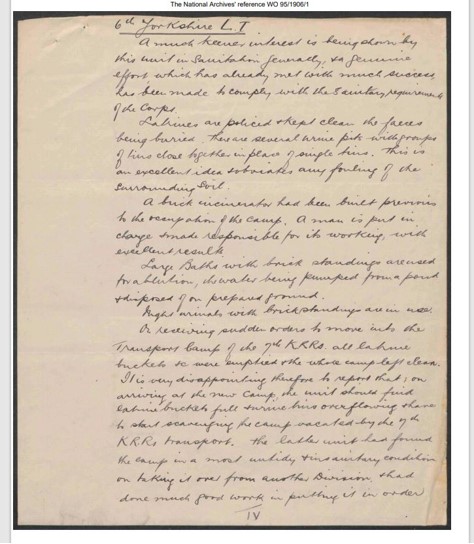
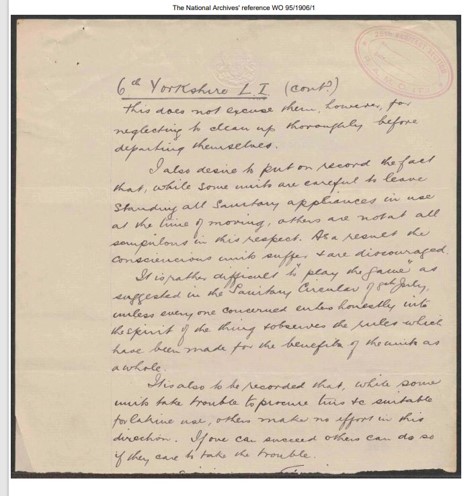
The stuff you find in a war diary! At the end of the August 1915 war diary for 6th Battalion King’s Own Yorkshire Light Infantry there is a handwritten note from a different officer to that who wrote the main diary. Unfortunately, the identity of the officer deploring other units “not playing the game” is unknown, as his signature has not been scanned.
Lamenting latrine etiquette!
The transcription of the entry is:-
”6th Yorkshire L.I.
A much keener interest is being shown by this unit in sanitation generally. A genuine effort which has already met with much success has been made to comply with the sanitary requirements of the Corps.
Latrines are policed and kept clean, the faeces being buried. There are several urine pits with groups of tins close together in places and single tins. This is an excellent idea and obviates any fouling of the surrounding soil.
A brick incinerator had been built previous to the occupation of the camp. A man is put in charge and made responsible for its working, with excellent results.
Large baths with brick standings are used for ablutions, the water being pumped from a pond and dispersed of on prepared ground.
Eight urinals with brick standings are in use.
On receiving sudden orders to move into the Transport Camp of the 7th KRRC all latrine buckets etc were emptied and the whole camp left clean. It is very disappointing, therefore, to report that, on arriving at the new camp, the unit should find latrine buckets full and and urine bins overflowing and have to start scavenging the camp vacated by the 7th KRR’s transport. The latter unit has found the camp in a most untidy and insanitary condition on taking it over from another Division and had done much good work in putting it in order.
This does not excuse them, however, for neglecting to clean up thoroughly before departing themselves.
I also desire to put on record the fact that, while some units are careful to leave standing all sanitary appliances in use at the time of moving, others are not at all scrupulous in this respect. As a result the conscientious units suffer and are discouraged.
It is rather difficult to “play the game” as suggested in the Sanitary Circular of 8th July unless everyone concerned enters honestly into the spirit of the thing and observes the rules which have been made for the benefit of the units as a whole.
It has also been recorded that, while some units take trouble to procure tins etc suitable for latrine use, others make no effort in this direction. If one can succeed others can do so if they care to take the trouble”.
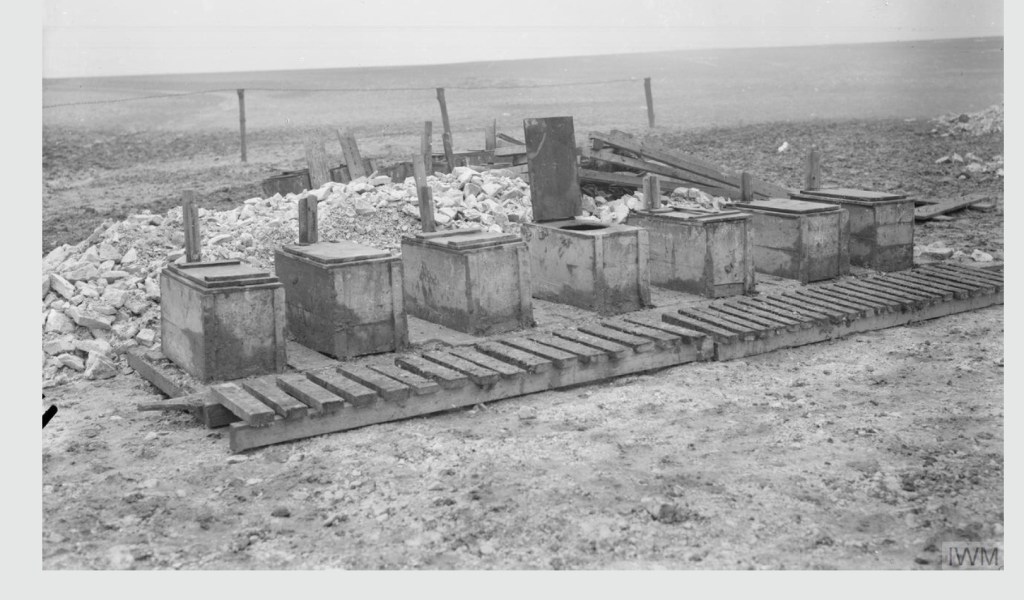
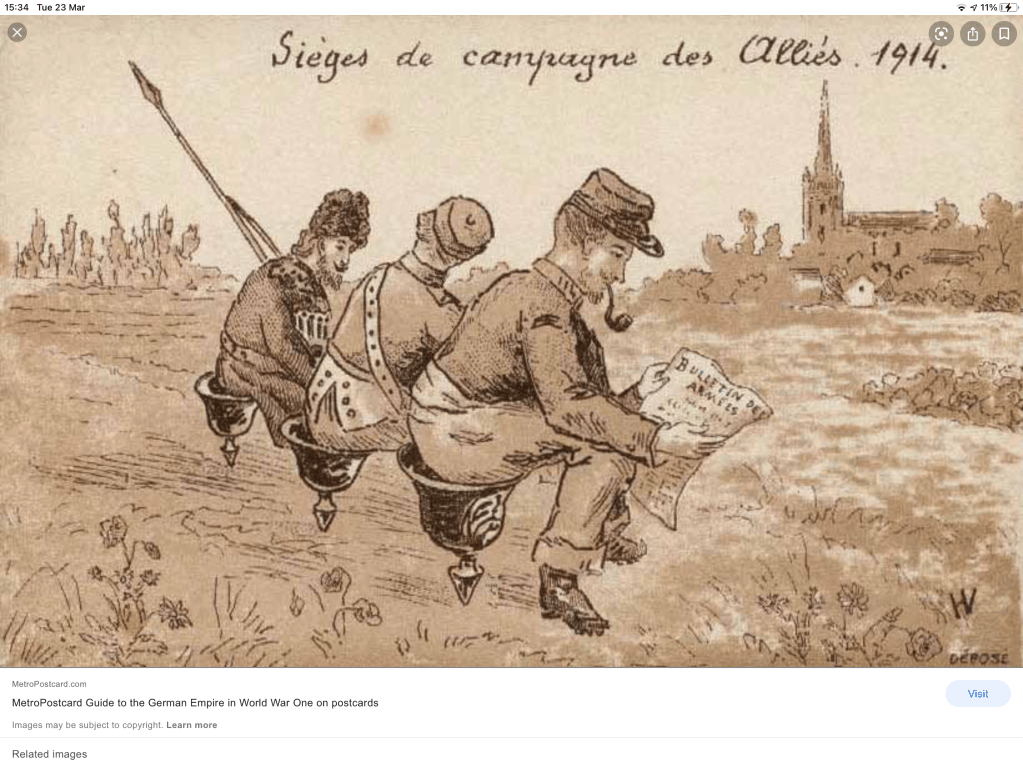
The image of latrines above is from IWM ref Q 29235 and is captioned Latrines, ANZAC Rest Station, Buire, 15/1/17. A Google search reveals many online photos that I decided might offend delicate sensibilities, but the cartoon gives you an idea of what the independent enquirer will expect to see!
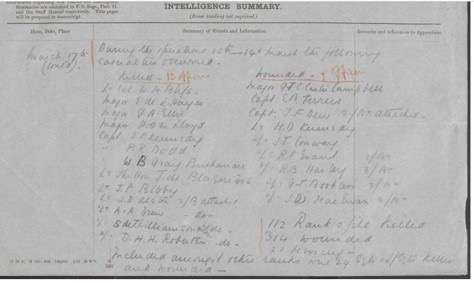
In most circumstances it’s a pretty forlorn hope that a battalion war diary will name anyone other than commissioned officers, but I have been pleasantly surprised when transcribing 6th King’s Own Yorkshire Light Infantry, including lists of Other Ranks casualties, for the Great War Group’s 14th Division history project. I haven’t come across my great uncle Alfred Ebdon, but then I haven’t advanced to the date he was wounded whilst serving with the battalion! Aside from that project, I’m looking at 2nd Battalion The Cameronians (Scottish Rifles) today for the Battle of Neuve Chapelle because Alfred’s brother, Walter, was serving with them, having landed at Havre with the battalion on 5th November 1914. Unfortunately the level of detail in the Rifles’ diary is not as extensive as the KOYLI, so I have no idea whether he was one of the 314 other ranks wounded during the operations 10-14th March 1915, but I do know he was not one of the 112 killed.
Both brothers survived the war, albeit Alfred was invalided out in 4th June 1917 (gun shot wound left thigh) and Walter subsequently married the widow of a third brother, John, killed Ypres Salient 1st October 1917 serving with 9th York and Lancs.
There is something unusual, however, about the Rifles’ war diary, which is that someone filed (at the beginning) a six and a half page typed biography (multiple copies in fact) and photo of an officer killed early on during the Battle of Neuve Chapelle.
This appears to have been taken from Buchen’s History of the War Vol. VI., p 81 and relates to Major Hesperus David Watkiss Lloyd, a 42 year old, single, career soldier, military surveyor and administrator awarded Order of the Osmanieh 4th class (Turkey), Order of the Medjidieh, 3rd Class (Turkey), Sudan Medal, two clasps, 1899-1901, mentioned in dispatches September 1901 for operations in the Bahr el Ghazal. At the end of 1908 he had completed ten years’ service in Egypt and had to choose between retirement from the army or rejoining his regiment. He chose the latter and subsequently served in South Africa.
When war broke out in 1914 he was stationed in Malta and wrote on 17th August 1914: “it is my cursed luck again to be out of the hunt. I spent the South African War in the Sudan: now I shall spend my time here. I feel it is 22 years of hard work – for I have worked hard, if not always to best effect – wasted”. However, a month later he was in camp in Winchester waiting for the battalion’s departure to France. A week after their arrival he wrote on 13th November 1914: “The weather is vile, but everyone is very fit, so far. But the mud, which covers the paved roads, is very bad. I remember visiting Waterloo and Wavre in the rain and, realising why Blucher was so late”. After suffering from trench foot he had a week’s leave in January 1915 and on 23rd February he wrote home about conditions at La Flinque (about half a dozen miles from Neuve Chapelle) and the difficulties of constructing fire and communication trenches. He was reported to be popular with the men under his command.
Private M Haskins is quoted, relating to the death of Major Lloyd during the Battle of Neuve Chapelle:-
“On the morning of 10th March, at exactly five minutes past eight, we received orders to advance and take three lines of German trenches. We took their first line very quickly, the distance being only 80 yards, and made for their second one right away. It was here that Colonel Bliss fell, between the first and second German trenches. We got their second one alright and made for the third. Major Lloyd left this trench at the front of his company, or all that was left of them, and I assure you that it was not a great many. He only got about ten yards when he fell; that would be as near as I can judge the time, about 9 o’clock. As regards his wounds, I cannot tell you for certain how many he had; when he was carried into the trench where I was, I noticed that he was wounded in the thigh by a bullet, but I think he was wounded somewhere about the body as well. There was a very heavy machine gun fire just there. I think that bowled over the Major. I am certain he was not wounded by shell fire … He will be missed by many in the battalion, where he was familiarly called Big Billy Lloyd.”
Major Lloyd’s sister, Eirene, added:-
“He lay for half an hour or so in the open, in great pain, and suffering from thirst. Harkins (sic – Haskins?), who was lying wounded in the trench, sent him his water bottle, and told a medical officer, who went to him and had him removed into the trench. When the firing moderated he was carried away to the ambulance, a difficult operation owing to the narrowness and sloppiness of the trench. He died just as they got him there. He was not buried with the other officers, but in a grave by himself at Port Logy, half a mile west of Neuve Chapelle. A cross was put up to him”.
Major Lloyd now rests under the care of the Commonwealth War Graves Commission and headstone at Euston Post Cemetery, Laventie. I wonder if Walter Ebdon ever had dealings with Big Billy Lloyd?
Source other than Buchen mentioned and CWGC website – The National Archives file WO 95/1715/1 2nd Battalion Cameronians or 2nd Scottish Rifles depending on what page you look at! Downloads of war diaries are still free, so you can read the biography if you so wish, plus war diary entries for the battle and maps.
It’s got to be done! As this is a Great War blog it is only fitting that on International Womens’s Day I give a shout out to all the women who stepped out of their comfort zone during the conflict to help keep the home front running and who rendered valuable service in the war zones.
We all know about the legions of nurses and VADs who served at the front and female munitions workers at home. But what about this lady who, not only rendered a community service, but also kept a family business going whilst her husband was away at the front. It had to be done!
Mrs Kitchener, grave digger at Aley Green Cemetery, Luton, Imperial War Museum photo Q 31238.
Off the top of my head I offer two lesser well known roles: The Women’s Timber Corps and Voluntary Women’s (police) Patrols.
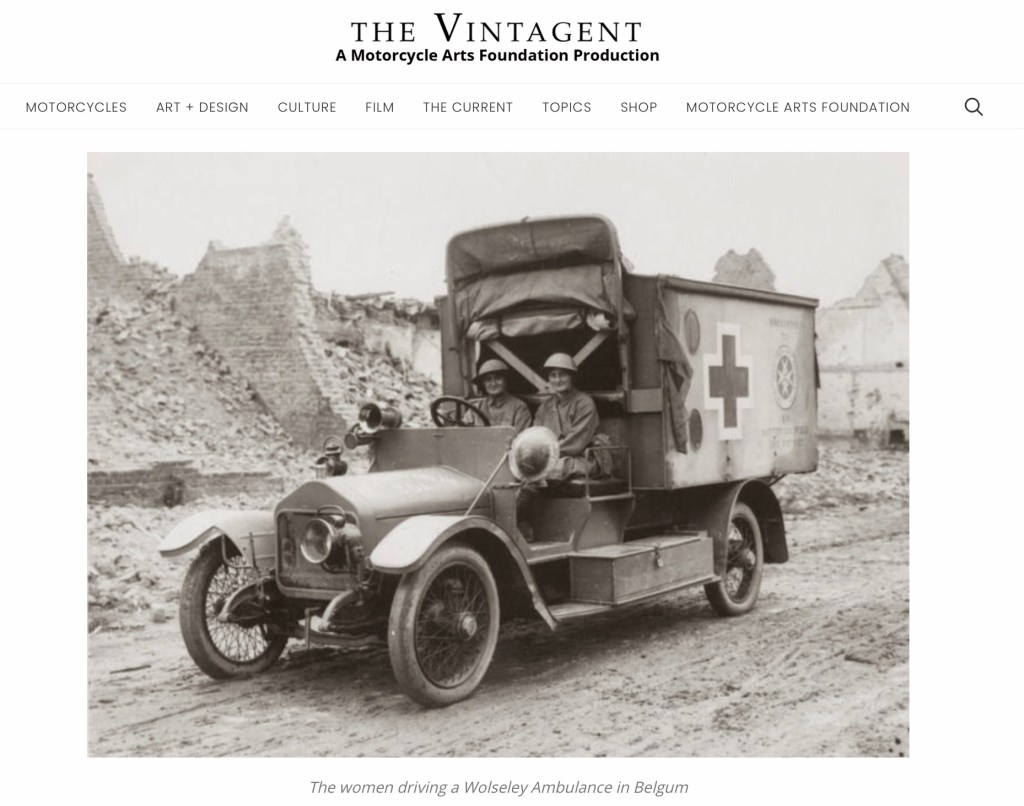
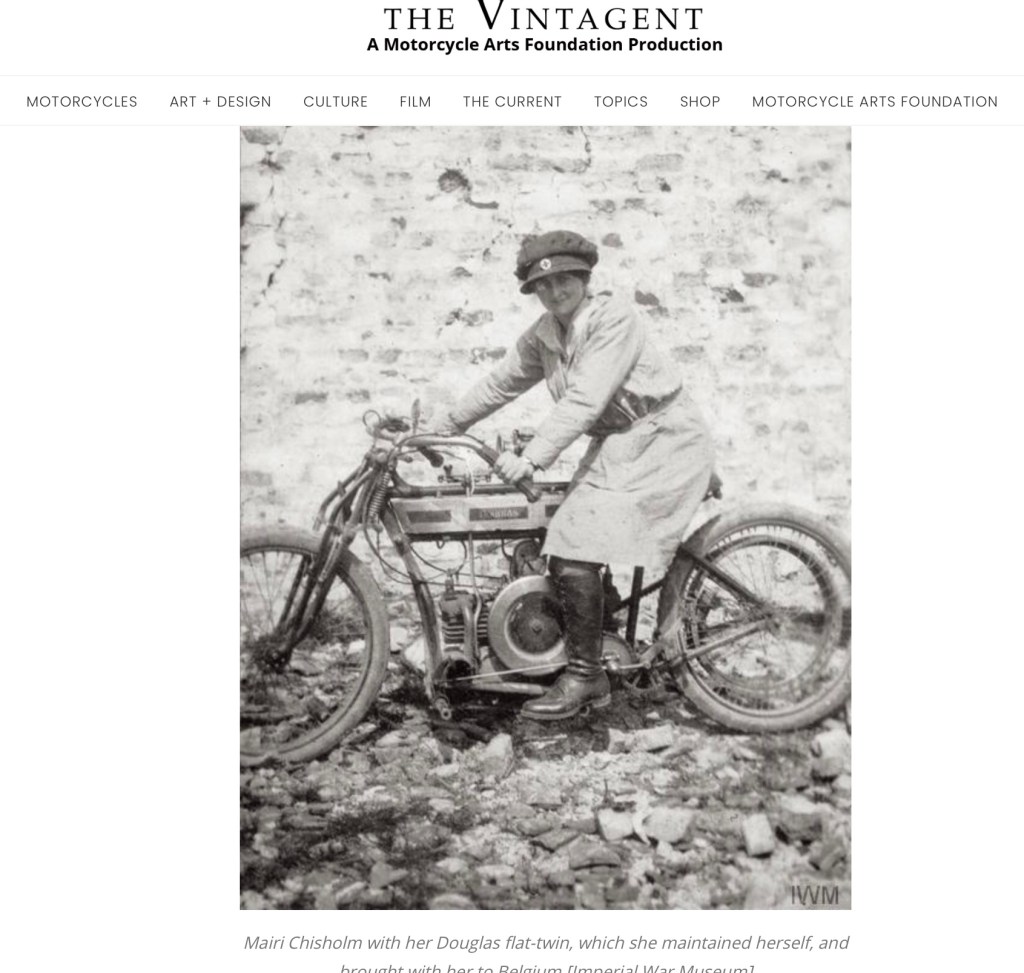
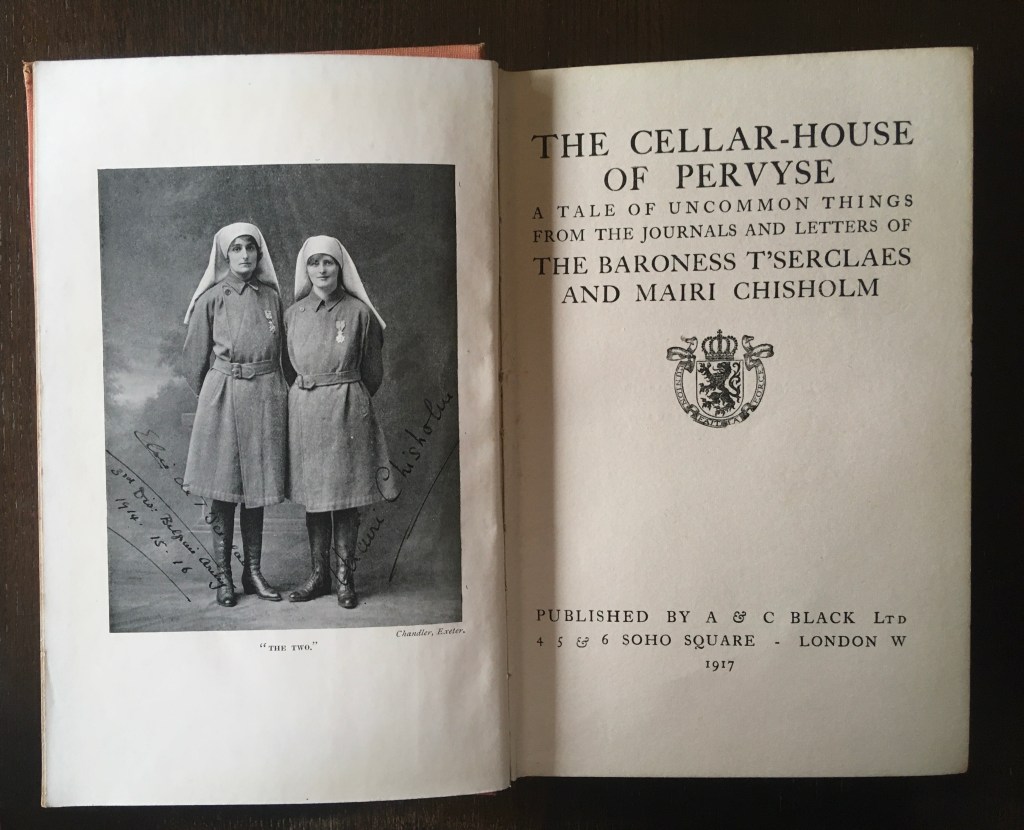
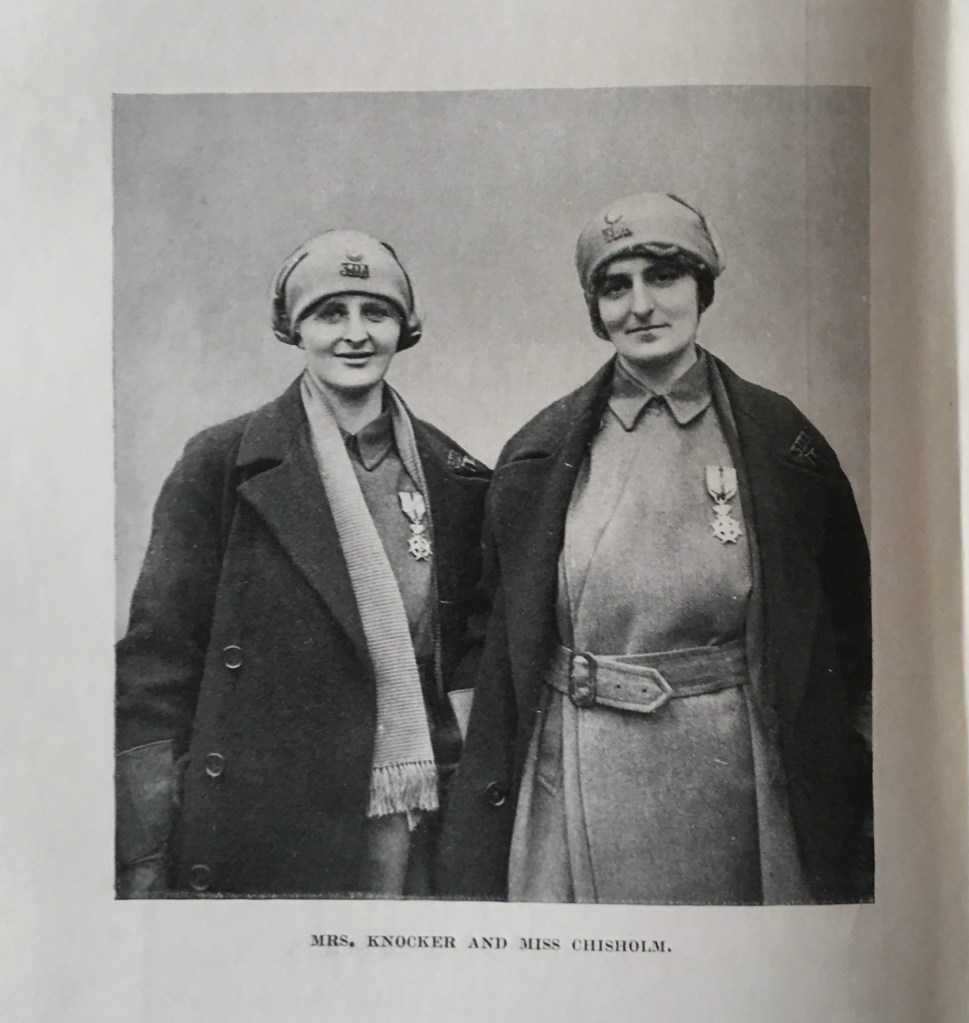
The main focus of this blog, however, is on two remarkable women, Elsie Knocker and Mairi Chisholm. In 1912 these two women, twelve years apart in age, from relatively affluent backgrounds, forged a friendship based on a passion for motor cycling. When war broke out two years later they went to Belgium with a small, independent ambulance corps founded by a British doctor, Dr Hector Munro.
The older, Elsie Knocker, was a divorcee (but claimed to be a widow to fit with the social mores of the times) and had trained as a nurse. She had been educated in Switzerland and was fluent in German and French.
Mairi Chisholm’s background was more affluent, but she could strip down and repair the motorcycle bought for her by her father, after she developed an interest following her older brother who competed in speed trials and rallies.
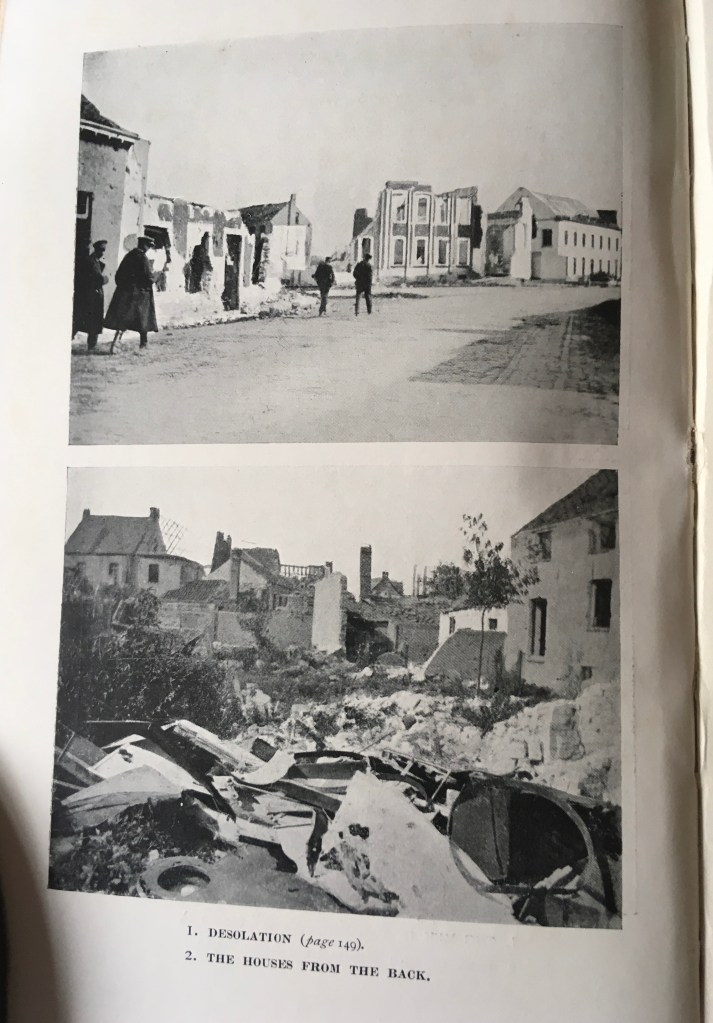
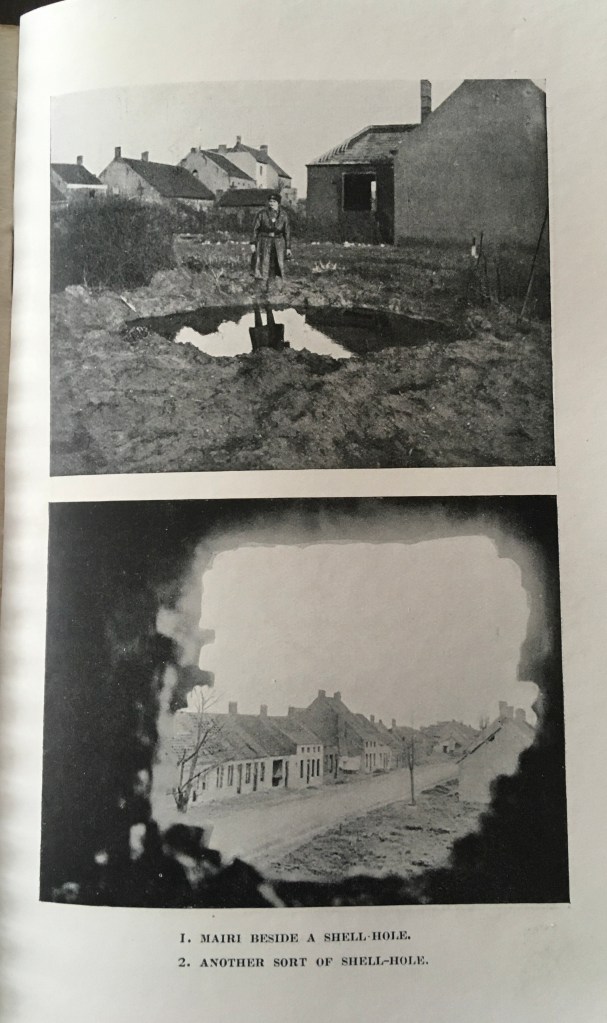
On arrival in Belgium they were initially located at a base hospital in Ghent before moving to a field hospital at Furnes. In November 1914 they decided to leave Dr Munro’s corps to move into the heart of the battle zone and they set up a dressing station in a cellar just a hundred yards from the trenches near Pervyse. That town lies north of Ypres, between Nieuwport on the Belgian coast and Diksmuide. Nearly all the inhabitants of the area had left.
They were not affiliated to the Red Cross and funded their work privately, which involved trips back to Britain for fund raising lectures etc. Their living conditions were awful but as well as providing aid to the wounded, they shared their cocoa and soup with Belgian soldiers. They had to move twice when the structures from which they operated were shelled.
They were awarded the Military Medal and the Knight’s Cross of the Order of Leopold II. They were also made officers of the Most Venerable Order of the Hospital of St John Of Jerusalem. In 1918 they were seriously injured in a gas attack and returned home for treatment. Both survived the war and lived long lives, albeit they never sustained their friendship.
In 1916 a Geraldine Mitton worked with Elsie and Mairi to write a book from their letters and notes while still at the front: “The Cellar House at Prevyse” was published in September of that year.
In her introductory notes Ms Mitton comments at the beginning:-
“Of all the things told of the Great War surely this is the most uncommon, that two women should have been at the front with the Belgian Army almost from the beginning.”
She ends her note:-
“The facts are so astounding that they need no dressing. My part has been merely that of a recorder, running two parallel journals together and omitting repetitions and details too small to be of general interest.”
Reprints of this book are available and there is a recent biography by Dr Diane Atkinson entitled Elsie and Mairi Go to War
It’s not possible to do Elsie and Mairi’s story justice in a blog and for those who want to know more without purchasing a book, these are some links to look at (and of course there is always Wiki!) and also footage on BBC social media platforms.





 Great War Old Gal