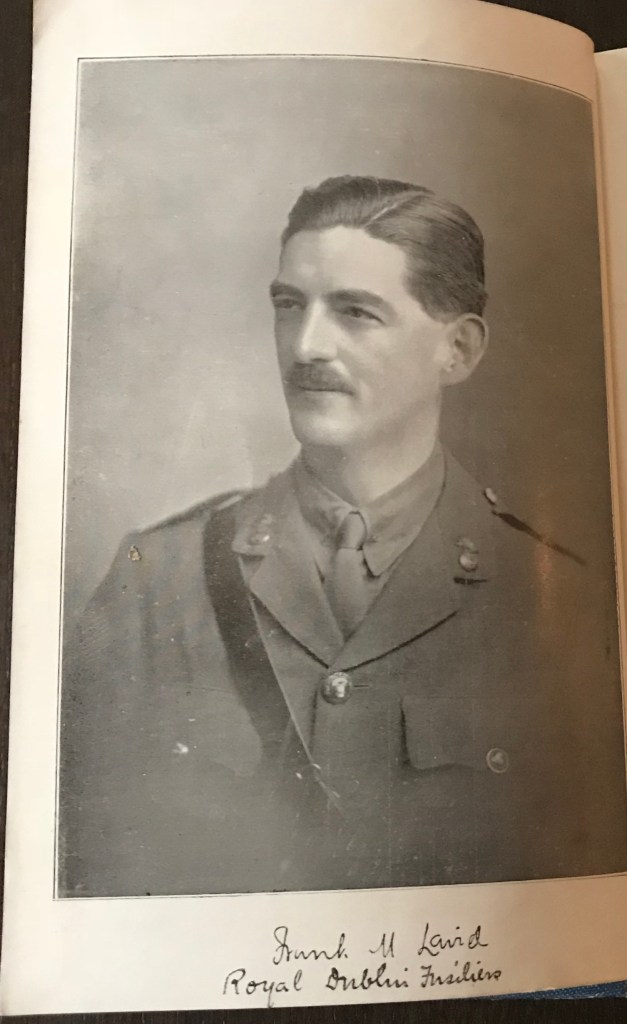
Frank Speaking relates to the unfinished First World War memoir of Royal Dublin Fusilier Francis Morrow Laird, which I transcribed. I added context and also narrative to finish his story, by reference to battalion war diaries and other primary sources.
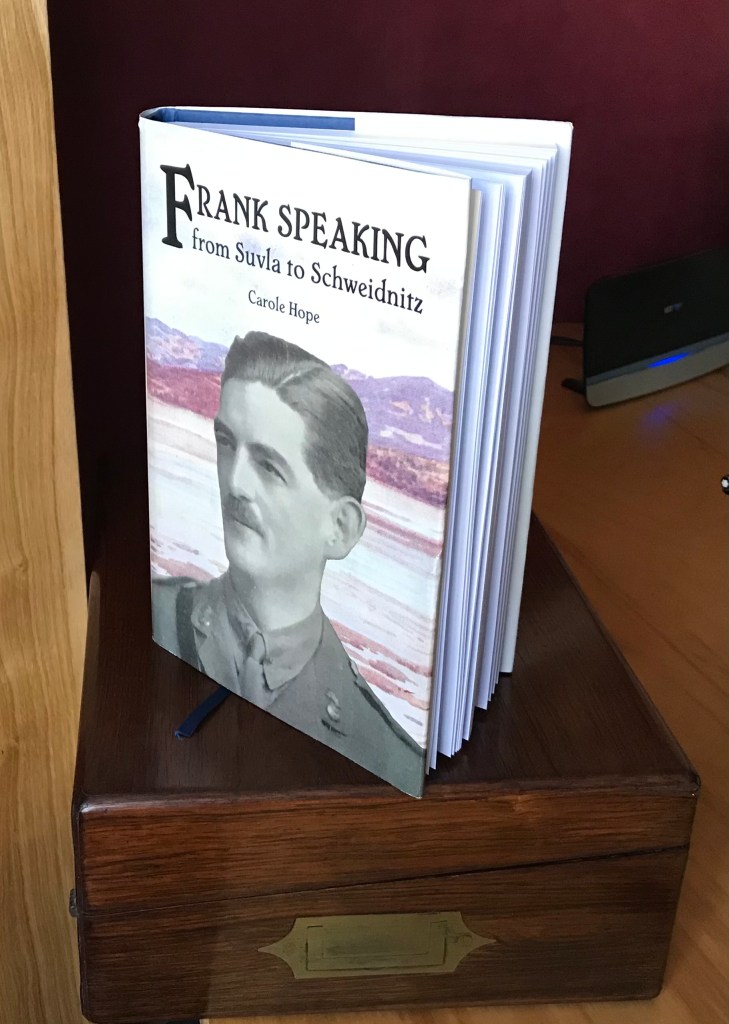
I have added notes in nearly every chapter of the memoir, but have made no attempt to provide a narrative, let alone detailed analysis, of the Great War as a whole, or even individual battles, nor of political events that I may have touched upon.
The book (with end papers) is 371 pages, including designed (orientation only) maps by Lyndsay Knight, other maps (possibly not as many as some readers might like), images, bibliography and index. It has just over 50K of Frank’s words and just under 60K of words added by me. It is a hardback book, blue board with a dust jacket designed by Lyndsay Knight and has a ribbon marker (I love the ribbon marker!)
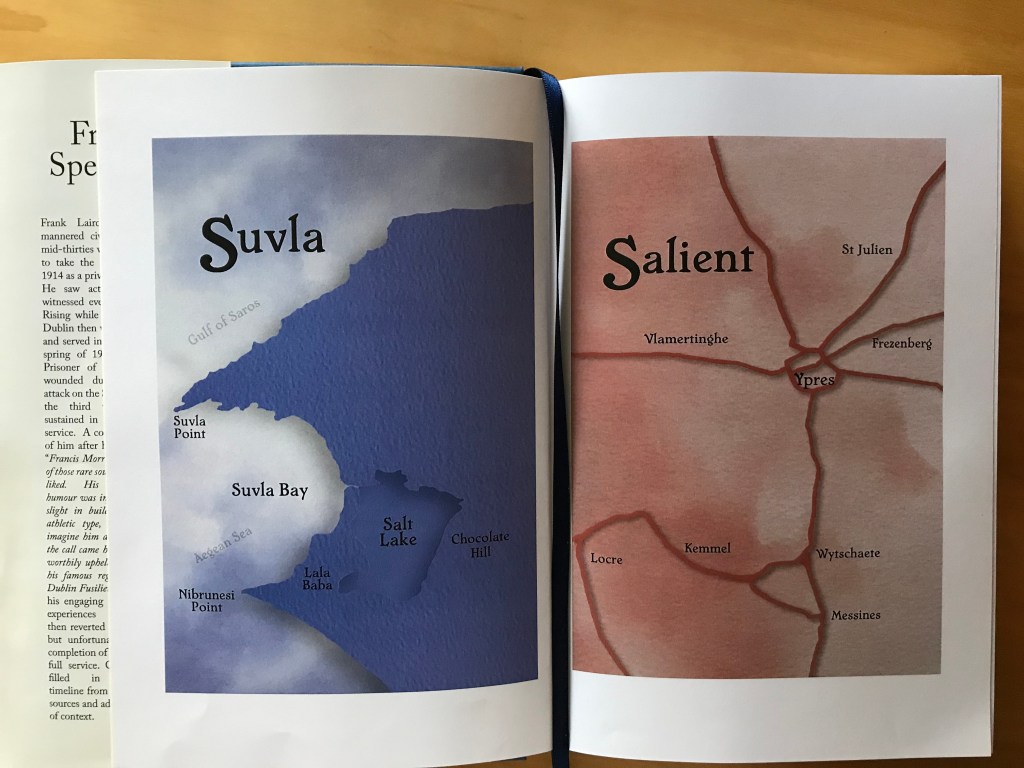
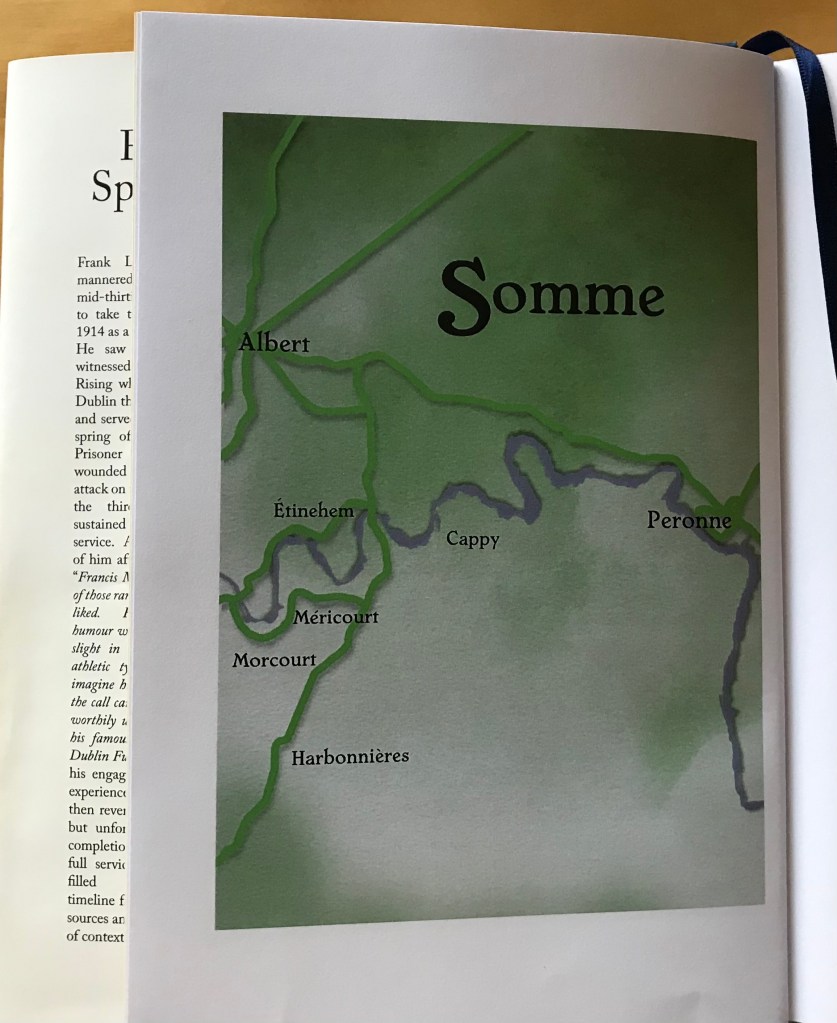
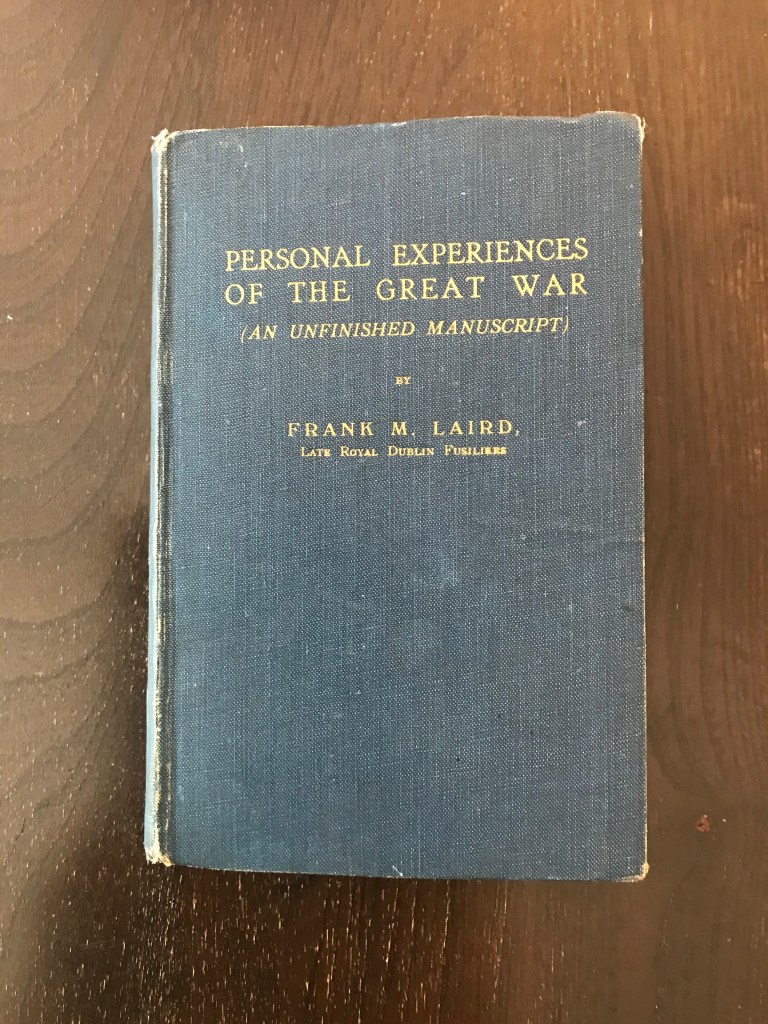
How did Frank Speaking come about? It began with the publication, in 1926, by May Laird of her husband’s memoir of his experiences during the period 1914 -1918. I don’t know how many copies were circulated by May, but judging by how few copies have ever been available for purchase subsequently (plus the price) I would say very few.
The next stage in the evolution of Frank Speaking was when I was researching my previous book, about a military chaplain, and Frank’s name came up on several occasions. I concluded from the quotes I read that Frank was equally an engaging writer as Fr Doyle, albeit with a more understated style of writing and wry humour, and that he could be my next project.
Moving on, the next (unexpected) step was the acquisition (a gift) of a physical copy of Frank’s memoir, albeit it has been digitalised and is available online:-
https://www.irishfamilyhistorycentre.com/store/703
Frank Laird’s early demise, aged 45 in 1925, meant that he never finished his memoir, but the absent timeline has been completed by me. However, the missing section was not at the end of his service but roughly halfway through. He had started by writing about the last eleven months, before reverting to the beginning of his service.
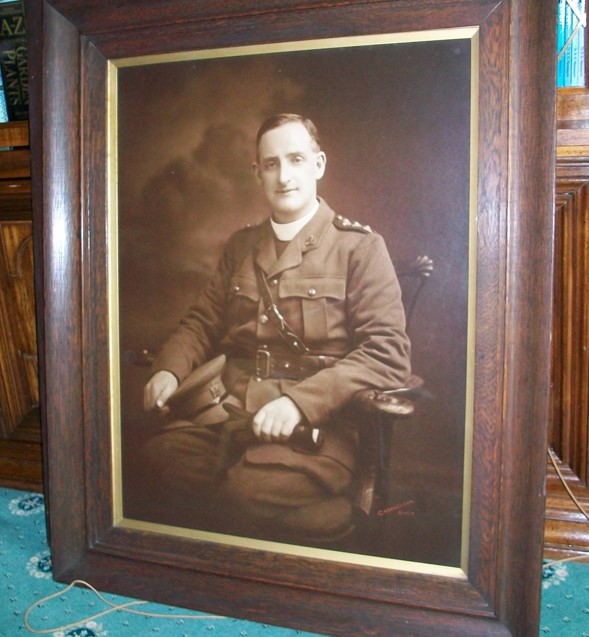
Frank was a mild-mannered civil servant in his mid-thirties when he signed up to take the King’s shilling in 1914 as a private soldier. He saw action at Gallipoli, witnessed events of the Easter Rising while on home duty in Dublin, then was commissioned and served in Flanders. In the spring of 1918 he became a Prisoner of War after being wounded during a counter-attack on the Somme, this being the third serious wound he had sustained in the course of his service. He was promoted to lieutenant in his absence as a guest of the Kaiser.
A contemporary wrote of him some years after his death: “Francis Morrow Laird was one of those rare souls whom everybody liked. His overflowing good humour was infectious … Rather slight in build and not of the athletic type, one could hardly imagine him a soldier, but when the call came he volunteered, and worthily upheld the traditions of his famous regiment, the Royal Dublin Fusiliers”.

In presenting Frank’s story, I also tried to tell a more rounded account of the men with whom he served.
Frank Speaking has been published by me i.e. I am the publisher as well as the editor/author of this book. The most daunting part of being one’s own publisher is the expense involved. It’s a bit like placing a bet at the “Bookies”, if you can’t afford to lose the money then best not to. The clear advantage, for unknown authors, of being one’s own publisher is the level of control over the process. Nowadays, with print on demand services, there is no need to pay for and have a huge stack of books stockpiled at home, hoping to make a big dent in the pile.
It takes some time to work out how to go about being your own publisher and sourcing a printer. The printing company I chose is not close to my home, but having identified it as my probable printer of choice I made one visit to discuss my project. This was, of course, when out of lockdown and they had Covid protocols in place. Subsequently, everything else was done online, via email and with the occasional telephone call when things got a bit fraught! How to explain to someone with no knowledge of your subject and how does that person convey their expertise to you, a layman?! I did receive a physical copy of the book, also to proof, after I approved the PDF.
I have 50 copies of the book on order, priced at £20 for sale. If I sold all 50 books, it would cover the printer’s invoice, with a bit of profit but, as I will be sending out complimentary review, legal deposit and “thank you” copies, that isn’t going to happen. In addition, there were other one off costs such as the purchase of ISBN number. I am under no illusion that this is going to be a money spinner!
Those people who are kind enough to purchase a copy of Frank Speaking will see that the nominal profit will be split between me, the Great War Group and Great War Huts. Please do visit their websites to see what *great* initiatives they have on offer.
Please also look out for reviews – don’t worry I will let you know!
The cost of packaging (cardboard book wrap) and second class postage within the UK is £3.50. I can investigate costs for posting abroad on request. It would be great to get the book into Ireland, albeit Brexit has made things tricky in that regard (I should have pulled my finger out and published earlier!). I’m still thinking about Amazon.
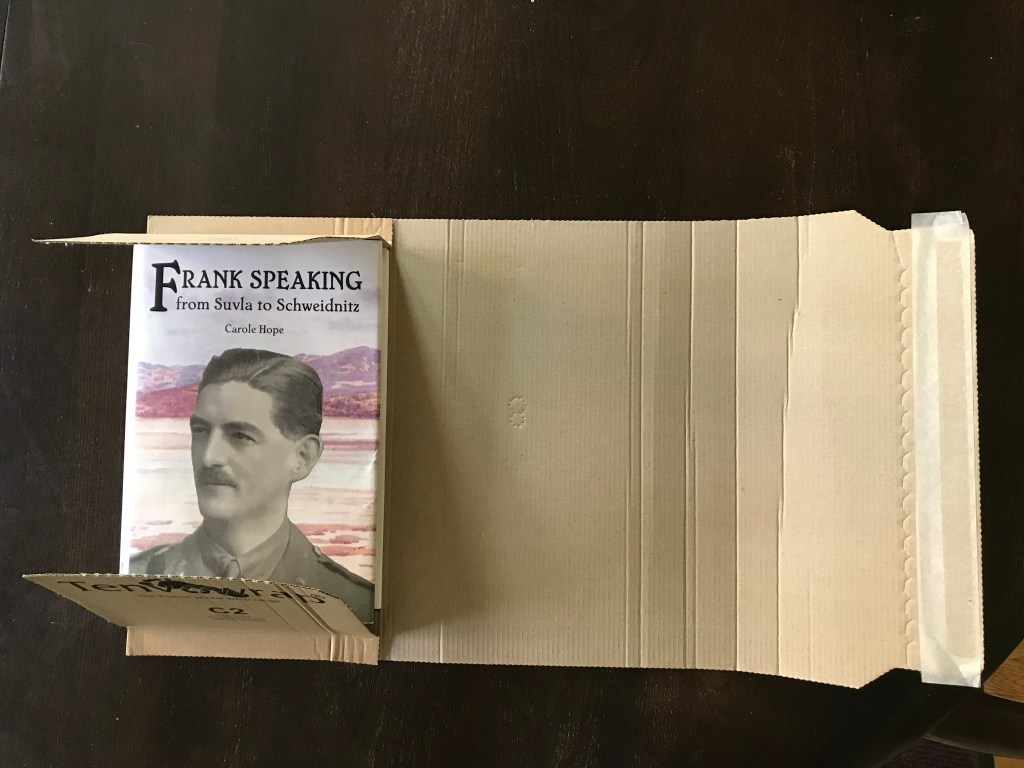
Please leave a comment on this blog, or DM me on Twitter or Messenger, if you would like to be added to the list of sales of the first batch of fifty. I hope there will be further batches! Once we can gather again, I shall be taking the books to conferences etc to sell and outlets hopefully in Ieper.
Now to start work on my next project, scaling down the large tome that is Worshipper and Worshipped (yes, it is far too big and yes, I did ignore all advice on the subject – but amazingly it still sold) to publish, renamed Chaplain and Correspondent aiming at less than 400 pages! In the meantime, I look forward to feedback from those kind purchasers of Frank Speaking – warts and all (the warts will be mine, not Frank’s!)
 Great War Old Gal